
Introduction
Most businesses make a critical mistake. They choose between CRO and SEO instead of using both together. However, this approach leaves money on the table.
Think about it this way. SEO brings visitors to your website. Meanwhile, CRO turns those visitors into customers. Therefore, you need both to succeed online.
In this guide, you’ll discover how these strategies work together. Moreover, you’ll learn a simple framework to implement them effectively.
What Are CRO and SEO?
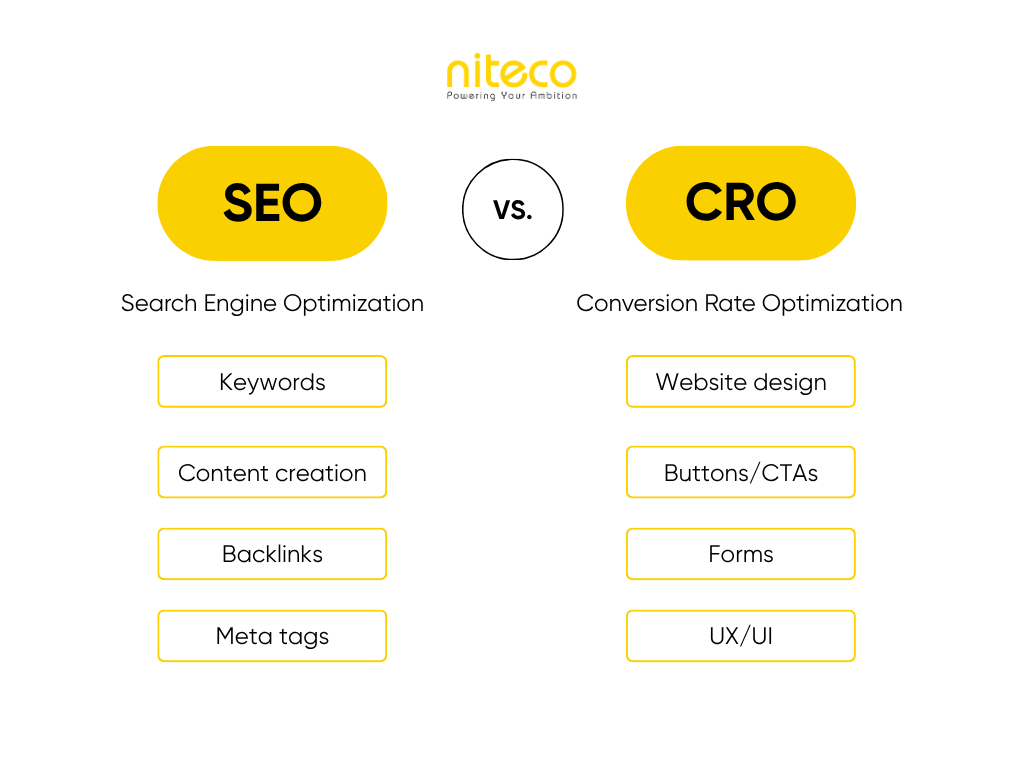
Search Engine Optimization (SEO)
SEO helps your website rank higher on search engines. As a result, more people find your business organically. For example, optimizing your content with relevant keywords increases visibility.
Additionally, SEO includes technical improvements like site speed and mobile optimization. These factors make your site more discoverable.
Conversion Rate Optimization (CRO)
CRO focuses on turning visitors into customers. In other words, it maximizes the value of your existing traffic. For instance, A/B testing different landing page designs can boost conversions significantly.
Furthermore, CRO examines user behavior to remove friction points. This ensures visitors complete desired actions more often.
Why You Need Both Strategies
SEO Without CRO: Traffic That Doesn’t Convert
Imagine attracting thousands of visitors who never buy anything. Unfortunately, this happens when you focus only on SEO. Your rankings might look impressive. However, poor conversion rates mean low revenue.
Therefore, traffic alone doesn’t guarantee success. You must optimize the user experience once visitors arrive.
CRO Without SEO: No One to Convert
On the other hand, a perfectly optimized landing page means nothing without traffic. Consequently, CRO efforts go to waste when visibility is poor.
In addition, paid ads can bring visitors initially. Nevertheless, organic traffic from SEO provides sustainable, cost-effective growth over time.
The Powerful Combination
When combined, CRO and SEO create compounding results. Specifically, SEO brings qualified traffic based on keyword intent. Then, CRO ensures those visitors take action.
Moreover, this combination improves important user signals. For example, better dwell time and lower bounce rates can positively influence rankings. As a result, your SEO performance improves even further.
How CRO and SEO Work Together
User Experience Affects Both
Search engines prioritize websites that deliver great experiences. Similarly, conversion optimization depends on smooth, intuitive user journeys. Therefore, improvements in one area naturally benefit the other.
For instance, faster page load times improve both search rankings and conversion rates. Studies show that even a one-second delay reduces conversions significantly.
Keyword Intent Drives Conversions
SEO teaches us to match content with search intent. Likewise, CRO requires understanding what visitors want. Consequently, aligning keyword optimization with user intent creates better outcomes.
For example, someone searching “buy running shoes online” has high purchase intent. Therefore, your landing page should focus on product selection and checkout, not educational content.
Content Optimization Serves Both Goals
High-quality, relevant content ranks well in search results. At the same time, compelling copy persuades visitors to convert. Thus, content strategy becomes a bridge between CRO and SEO.
Additionally, well-structured content with clear headings improves readability. This helps both search engines and human visitors understand your message.
A 4-Step Framework to Integrate CRO and SEO
Step 1: Audit Your Current Performance
First, analyze your existing traffic and conversion data. Use Google Analytics to identify high-traffic pages with low conversion rates. These represent your biggest opportunities.
Furthermore, check your SEO performance using tools like Google Search Console. Look for pages ranking well but underperforming on engagement metrics.
Step 2: Align Your Metrics
Next, establish shared goals between teams. For example, track both organic traffic growth and conversion rate improvements together. This creates accountability across your organization.
In addition, monitor user engagement signals like time on page and bounce rate. These metrics matter for both SEO rankings and conversion optimization.
Step 3: Run Strategic Experiments
Now, prioritize tests that benefit both strategies. For instance, test headline variations that improve click-through rates from search results and on-page conversions.
Moreover, experiment with page layouts that enhance user experience without harming SEO. Always maintain proper heading hierarchy and keyword placement.
Important testing areas include:
- Landing page optimization for target keywords
- Call-to-action placement and messaging
- Site speed improvements
- Mobile responsiveness
- Navigation structure
Step 4: Measure and Iterate
Finally, track results from your integrated efforts. Compare performance before and after changes. However, remember that SEO results take longer than CRO tests.
Therefore, set appropriate timeframes for evaluation. CRO tests might show results in weeks, while SEO improvements often require months.
Consequently, maintain patience while continuously optimizing. Small, consistent improvements compound over time.
Practical Tips for Implementation
Optimize for Search Intent First
Start by ensuring your content matches what searchers actually want. For example, informational queries need educational content, while transactional searches require product pages.
As a result, you’ll attract more qualified traffic that’s easier to convert.
Improve Site Speed
Page speed affects both rankings and conversions. Therefore, compress images, minimize code, and use fast hosting. These technical improvements deliver dual benefits.
Create Clear Navigation
Visitors and search engines both need clear site structure. Thus, organize content logically with intuitive menus. Additionally, use internal linking to guide users through your funnel.
Test, But Don’t Break SEO
When running CRO experiments, preserve important SEO elements. For instance, keep your primary keywords in headings and maintain proper HTML structure.
However, feel free to test different arrangements and supporting copy. These changes can improve conversions without harming rankings.
Focus on Mobile Experience
Most searches now happen on mobile devices. Consequently, your mobile experience must be excellent for both discovery and conversion.
Common Mistakes to Avoid
Ignoring One Strategy
Some teams focus exclusively on traffic or conversions. However, this imbalanced approach limits growth potential. Instead, allocate resources to both areas strategically.
Making Changes Without Testing
Never assume you know what works best. Therefore, always test significant changes before full implementation. Data should guide your decisions, not opinions.
Forgetting About User Intent
Remember that different visitors have different goals. Consequently, create varied content and conversion paths for different search intents.
Conclusion
CRO and SEO aren’t competing strategies. Rather, they’re complementary approaches that amplify each other’s results.
SEO brings qualified traffic to your website. Then, CRO converts that traffic into customers and revenue. Together, they create a complete digital marketing system.
Therefore, stop choosing between them. Instead, implement the four-step framework outlined above. Start with an audit, align your metrics, run strategic tests, and measure results continuously.
As a result, you’ll see improvements in both organic visibility and conversion performance. Moreover, these gains compound over time, creating sustainable business growth.
Finally, remember that success requires patience and consistency. Keep optimizing both strategies, and you’ll build a winning digital presence that drives real results.
https://pixicondigital.com/conversion-rate-optimization