
Every growing e-commerce brand in India eventually faces the same question: should you build an affiliate program, pour money into paid ads, or do both? Each channel works differently, carries different risk, and rewards different kinds of businesses. This guide breaks down how they compare so you can choose — or sequence — the right one for your store.
How Each Channel Works
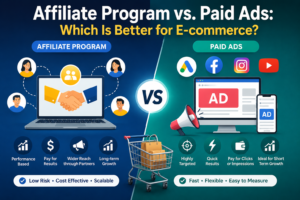
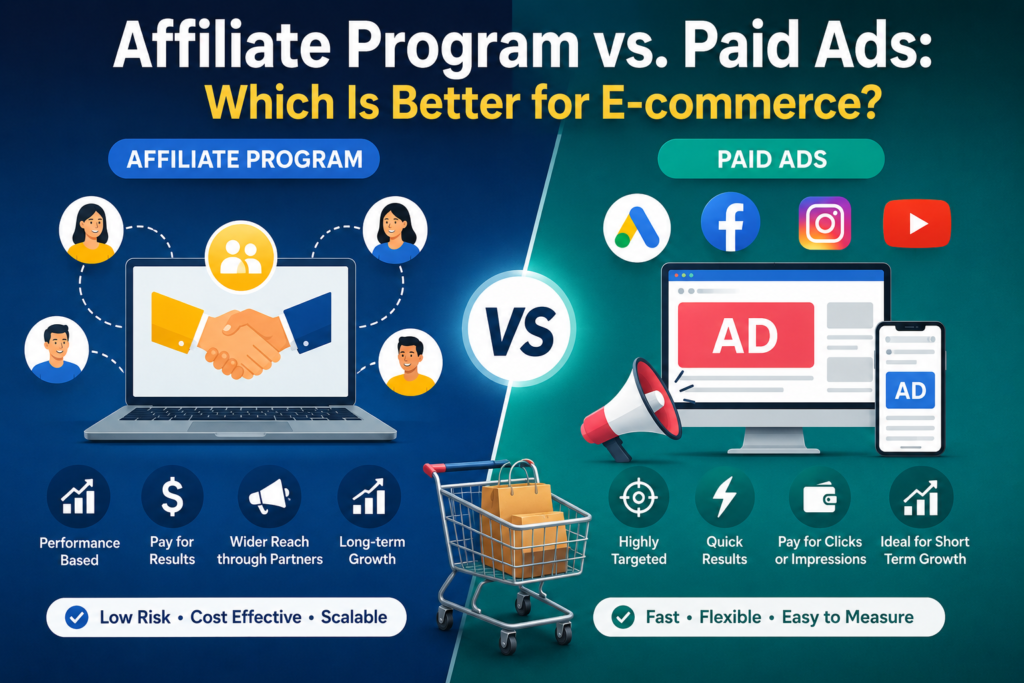
Affiliate programs are performance-based. You recruit bloggers, influencers, coupon sites, or content creators who promote your products using tracked links. You only pay a commission when a sale actually happens, making it low-risk and cash-flow friendly.
Paid ads (Google Ads, Meta, Amazon Ads) are pay-to-play. You bid for visibility and pay per click or impression regardless of whether a sale follows. This gives you faster, more controllable reach — but at upfront cost and risk.
Cost and ROI Implications
| Factor | Affiliate Program | Paid Ads |
|---|---|---|
| Upfront cost | Low (platform fee + time) | High (ad spend required daily) |
| Payment trigger | Only on confirmed sale | On click/impression, sale not guaranteed |
| Speed to results | Slower to build momentum | Fast, near-immediate traffic |
| Scalability | Scales with partner network growth | Scales with budget, but costs rise (ad fatigue, auction inflation) |
| Risk | Low — pay for performance | Higher — spend can outpace return |
In India, CAC (Customer Acquisition Cost) through paid ads has been rising steadily in competitive categories like fashion and electronics due to auction inflation, while affiliate CAC tends to stay more predictable since payout is a fixed percentage of sale value. ROAS (Return on Ad Spend) for paid ads needs constant monitoring and creative refresh to avoid decline, whereas affiliate ROI is generally more stable once a partner network matures — though slower to build initially.
A Simple Decision Framework
Ask these four questions:
- Budget — Can you commit to consistent daily/monthly ad spend? If cash flow is tight, affiliates reduce risk since you pay only for results.
- Risk tolerance — Comfortable with variable, sometimes wasted spend for speed? Choose ads. Prefer guaranteed-performance spend? Choose affiliates.
- Product category — High-consideration or niche products (skincare, wellness, home goods) often convert well through influencer affiliates who build trust. Commoditized, high-search-volume products (electronics, apparel basics) often perform well with paid search/shopping ads.
- Seasonality — For short sales spikes (festive sales, flash sales), paid ads offer immediate control. For sustained, long-term brand building, affiliates compound value over time as content keeps ranking and circulating.
Most established brands eventually run both — paid ads for immediate, controllable demand, and affiliates for compounding, lower-cost long-term growth.
Lightweight ROI Calculator Worksheet
Use this outline to model both channels before committing budget:
Inputs needed:
- Monthly ad spend (₹)
- Expected CAC via ads (₹ per customer)
- Affiliate payout % (commission rate)
- Average Order Value, AOV (₹)
- Expected conversion rate
- Customer Lifetime Value, LTV (₹)
Simple formulas:
- Paid Ads CAC = Ad Spend ÷ Number of Customers Acquired
- Affiliate CAC = (AOV × Payout %) per sale
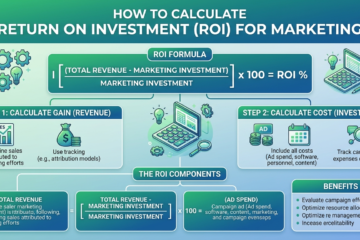
- ROI = (LTV − CAC) ÷ CAC
- Break-even ROAS = 1 ÷ Profit Margin
Plug in your own numbers monthly — if Affiliate CAC stays consistently lower than Paid Ads CAC relative to LTV, it signals a good candidate for scaling the affiliate program further.
Mini Case Studies (Illustrative Examples)
Case 1 — Affiliate-led growth: A niche skincare brand partnered with a small group of beauty micro-influencers offering 15% commission per sale. Content (honest reviews, tutorials) kept generating traffic for months after publishing, keeping CAC low and stable. Lesson: affiliate programs reward patience and work best with products that benefit from trust-based recommendation.
Case 2 — Paid-ads-led growth: A consumer electronics accessory store used Meta and Google Shopping ads during a festive sale window, driving a fast spike in traffic and revenue within days. CAC rose as competition increased near the sale peak, but the short-term revenue goal was met. Lesson: paid ads excel at speed and control but require active budget management to protect margins.
Quick-Start Checklists
Launching an Affiliate Program:
- Choose a platform/tool (e.g., Refersion, Post Affiliate Pro, or a marketplace like Amazon/Flipkart affiliate)
- Set a clear commission structure (flat or percentage-based)
- Draft simple partner terms (payout schedule, disclosure requirements, prohibited practices)
- Build an onboarding flow (welcome kit, product assets, tracked links)
- Start with 5–10 partners before scaling recruitment
Starting Paid Ads:
- Pick 1–2 channels to start (Google Search/Shopping or Meta)
- Set a realistic test budget (e.g., ₹15,000–₹30,000/month to start)
- Set up conversion tracking and attribution (Meta Pixel, Google Ads conversion tracking, GA4)
- Define target CAC and ROAS thresholds before launch
- Review performance weekly and reallocate budget toward top performers
FAQs
What is an affiliate program and how does it work for e-commerce? It’s a performance-based partnership where creators or partners promote your products with tracked links and earn a commission only when a sale happens.
When should Indian e-commerce stores consider affiliates vs. paid ads? Choose affiliates for lower-risk, trust-driven, long-term growth; choose paid ads when you need fast, controllable traffic for a specific window like a sale event.
How do CAC and ROAS compare between affiliates and paid ads? Affiliate CAC is generally more predictable since it’s tied to a fixed commission rate, while paid ads’ CAC and ROAS fluctuate with competition and require ongoing optimization.
What are common pitfalls in affiliate programs in India? Weak partner vetting, unclear commission terms, poor tracking setup, and neglecting to support partners with creative assets are the most common reasons affiliate programs underperform.
Final Thoughts
Neither channel is universally better — they solve different problems. Paid ads buy speed; affiliates build compounding, lower-risk growth. Use the decision framework and ROI worksheet above to test both at small scale, then double down on whichever channel your numbers favor for your specific product and stage of growth.