
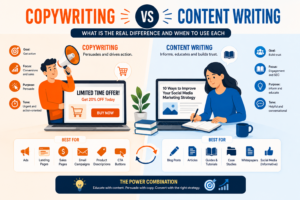
Copywriting vs Content Writing is a topic that many marketers and business owners want to understand. You might have wondered why some writing makes you want to buy something immediately while other writing teaches you something without asking for a sale.
The answer is simple. In fact, it is about understanding the difference between copywriting and content writing. Both copywriting and content writing are parts of marketing. However, they have different purposes. Therefore, understanding those purposes is important for marketers. Copywriting is meant to persuade people to do something while content writing is meant to teach people something give them information and build trust with them over time.
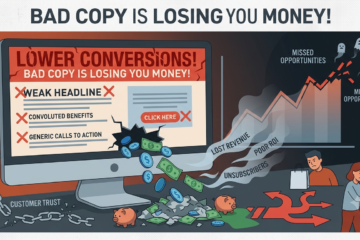
You can also explore our article on Why Bad Writing Is Costing You Money on Your Landing Pages to learn how strong writing improves conversions.
If you are a marketer, a business owner, a freelancer, or a student learning about digital marketing, then knowing when to use copywriting and content writing can make a significant difference in your marketing results.
What is Copywriting vs Content Writing?
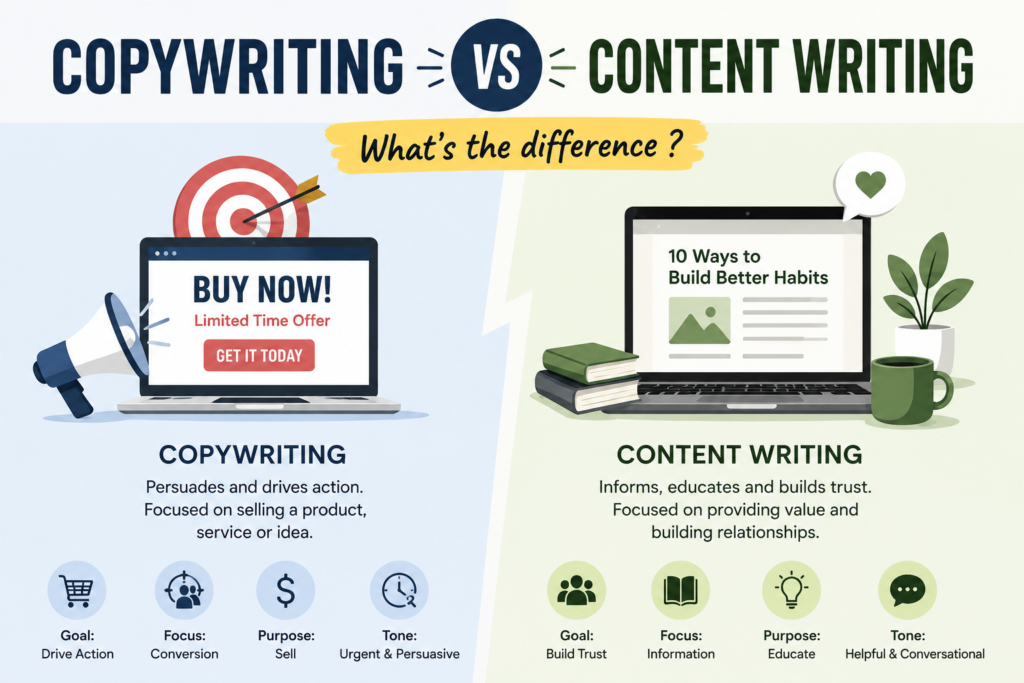
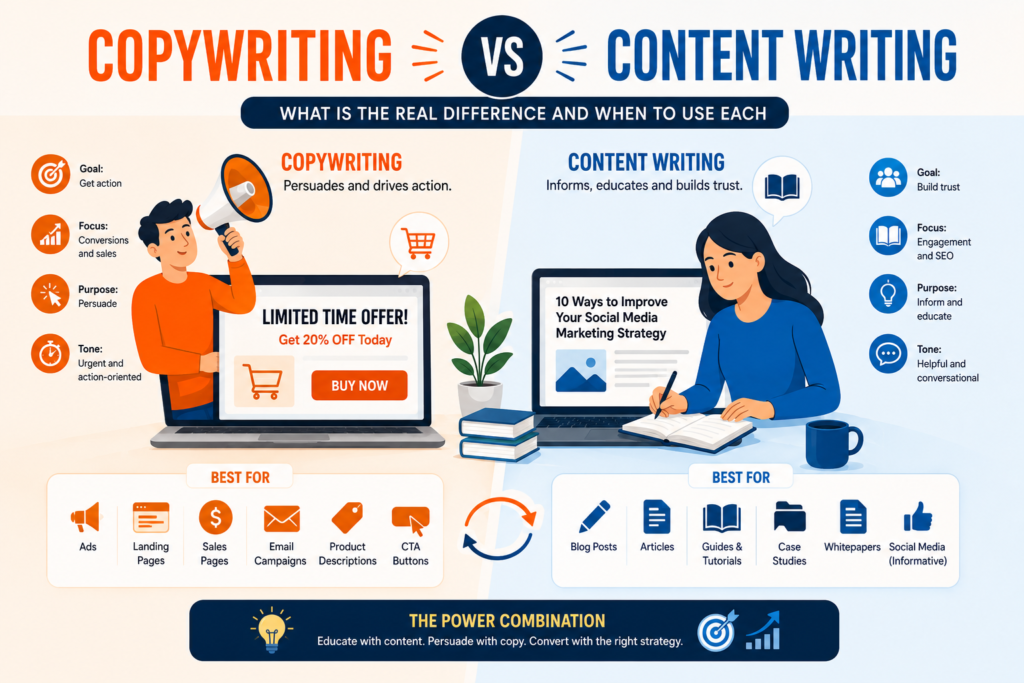
copywriting is the art of writing to get the reader to do something. That thing could be buying a product signing up for a newsletter downloading a book booking a meeting clicking a button or starting a trial. Moreover, every sentence in copywriting is written to encourage the reader to take action. You will often find copywriting in landing pages Facebook and Google ads, sales pages, product descriptions, email campaigns, headlines and buttons that say “Click”.
For example of saying “Our software has many useful features” a copywriter might say “Save 10 hours every week with our software that automates your daily tasks. Start your trial today”. Notice the difference. It tells you how you will benefit first and then asks you to do something.
Content writing is created to teach people something, give them information, entertain them, or solve a problem. In addition, it helps build trust with readers. Of asking people to buy something right away content writing helps them understand something builds trust and makes a brand seem like a reliable source of information. Examples of content writing include blog posts, articles, guides, tutorials, white papers, case studies and educational social media posts.
Good content writing answers the questions people are already asking on Google. For example a blog post called “10 Ways to Improve Your Social Media Marketing Strategy” helps readers learn something. It does not try to sell them something. Instead, it builds trust and makes readers more likely to trust the brand.
Copywriting vs Content Writing: Key Differences
Here are the differences between copywriting and content writing:
Goal
The main goal of copywriting is to get people to do something while the main goal of content writing is to teach people something and build trust.
Writing Style
The writing style of copywriting is persuasive focused on benefits while the writing style of content writing is informative and conversational.
Length
Copywriting is usually short and to the point while content writing is often longer and more detailed.
Focus
The focus of copywriting is on conversions and sales while the focus of content writing is on engagement and search engine optimization.
Success Metrics
The w bbay we measure the success of copywriting and content writing is different.
Neither copywriting nor content writing is better than the other. Rather, they solve different marketing problems.
How to Choose Between Copywriting vs Content Writing
Before you start writing ask yourself these three questions:
1. What is your goal?
If your goal is to get people to do something use copywriting. If your goal is to teach people something use content writing.
2. Where is your audience in the marketing process?
Think about where your audience’s in their journey to buying something. If they are just starting to learn about something, use content writing. However, if they are ready to make a decision, use copywriting.
3. What type of content are you creating?
The type of content often tells you which writing style to use. Use copywriting for landing pages, ads, email campaigns, product pages and buttons that say “Click”. Use content writing for blog posts, tutorials, case studies, asked questions and educational articles.
Can Copywriting vs Content Writing Work Together?
Yes, they can. In fact, the best marketing campaigns use both copywriting and content writing together. Imagine a software company that publishes a blog post called “How to Reduce Customer Churn in 30 Days”. This post teaches people something and, therefore, attracts visitors through search engines. At the end of the post readers see a button that says “Download our Free Customer Churn Calculator”. Clicking that button takes them to a landing page with copy that explains why they should download the tool. That is the combination of content writing and copywriting.If you want to improve your conversions, read our guide on How to Write High-Converting Landing Page Copy.
Best Practices for Copywriting vs Content Writing
If you want your copy to be effective keep these tips in mind:
Focus on the readers benefits of the products features.
Write headlines.
Use action words.
Keep sentences to read.
Create one call to action.
Test headlines and buttons to see what works best.
Remember great copy removes confusion makes the next step obvious.
Best Practices for Effective Content Writing
If you are writing blog posts or articles focus on helping your readers. Some useful tips include:
Answer the question your audience is asking.
Use subheadings to make the text easier to read.
Break paragraphs into ones.
Include examples, statistics and practical advice.
Write in a tone thats friendly and approachable.
Keep your brand voice consistent across every piece of content.Helpful content creates trust, and as a result, that trust eventually leads to sales.
How Do You Measure Success?
The success of copywriting and content writing is measured differently. For copywriting look at the conversion rate, click-through rate sales leads generated and sign-ups. For content writing measure the organic website traffic time spent on the page search engine rankings, social shares and returning visitors. Both are important because they contribute to different stages of the customer journey.
Quick Action Checklist
Before publishing your piece of content ask yourself:
What is my main goal?
Am I trying to educate or persuade?
Does this content match its purpose?
Is there a call to action if action is needed?
Is the content easy to scan with headings and short paragraphs?
Does the writing maintain a brand voice?
Have I connected my content to the step in the customer journey?
Final Thoughts
Copywriting and content writing are not competitors they are partners.Copywriting helps you turn visitors into customers by encouraging action. Meanwhile, content writing helps you build trust, improve search engine optimization, and create long-term relationships with your audience. Instead they know when to educate, when to persuade and how to combine both for the results. Whether you are writing a blog post creating a landing page or planning your marketing campaign understanding the strengths of both copywriting and content writing will help you connect with your audience and achieve marketing results.
Therefore, understanding Copywriting vs Content Writing is essential for creating an effective marketing strategy. Moreover, using both approaches together can help you attract, engage, and convert your audience more effectively.