
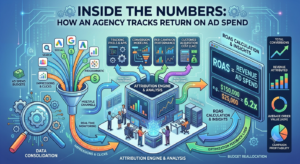
Every month agencies give brands a report that’s full of abbreviations like Return on Ad Spend, Customer Acquisition Cost and Lifetime Value and it also has a lot of charts. Behind these numbers there is a system that the agency uses to track, model and make decisions about where every marketing dollar goes for the brand. Here is what actually happens behind the scenes and how to read the report like someone who works at the agency.
The Three Important Metrics, Defined
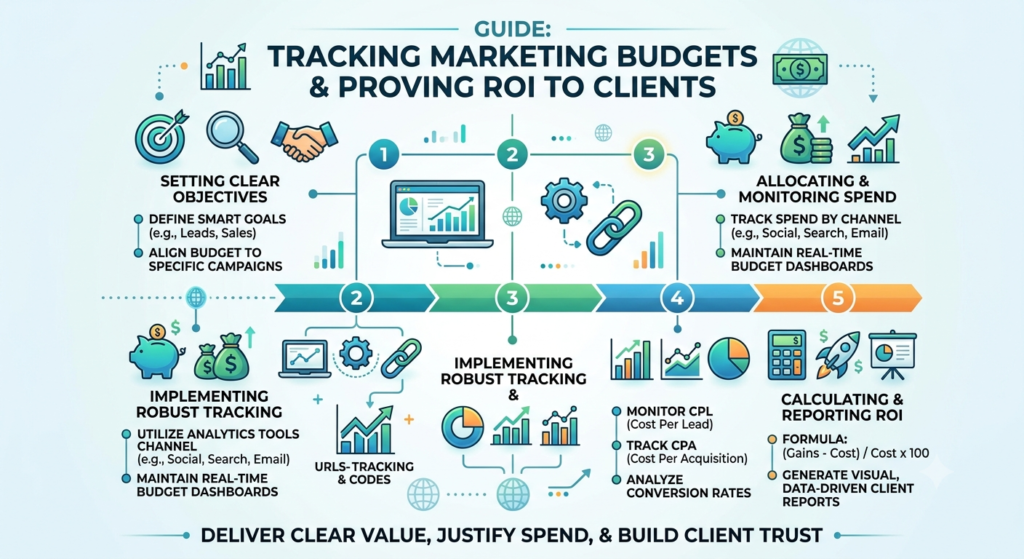
Return on Ad Spend is a measure of how much money’s made from the money spent on ads for the brand. For example if the Return on Ad Spend is 4 that means the brand makes 4 dollars for every 1 dollar spent on ads. The agencies get this information from the ads on platforms like Meta, Google and TikTok for the brand. They also use server-side tracking to make sure the numbers are correct when people use ad blockers or have privacy settings on their phones.
Customer Acquisition Cost is the amount of money spent to get customers for the brand. The agencies usually calculate two types of Customer Acquisition Cost for the brand: one that includes all the money spent and all the new customers and another one that only includes the money spent on paid ads for the brand. This is because if they include the people who come to the website for free it can make the performance look better than it really is for the brand.
Lifetime Value is an estimate of how money a customer will spend with the brand over time. The agencies use data to make this estimate for the brand like how times the customer buys something how much they spend on average for the brand. How long they keep buying from the brand.
An Example: A Direct-to-Consumer Skincare Brand
Let us say a direct-to-consumer skincare brand spends 50,000 dollars per month on paid media ads for the brand. The agencys report shows the following numbers for the brand:
- The Return on Ad Spend for all the money spent is 3.2 for the brand.
- The Customer Acquisition Cost for paid ads is 42 dollars for the brand.
- The Lifetime Value of a customer over 12 months is 168 dollars for the brand.
- The ratio of Lifetime Value to Customer Acquisition Cost is 4 to 1 for the brand.
At first these numbers look good for the brand. The ratio of Lifetime Value to Customer Acquisition Cost is better than the benchmark of 3 to 1 for growth for the brand. But the agency looks deeper: the Customer Acquisition Cost has gone up by 18% over the months because other brands are bidding more on ads and the Return on Ad Spend has stayed the same only because the average order value went up when the brand had a promotion.
How Agencies Actually Track These Numbers
- Collecting data from ads and servers. The agencies use platform pixels and server-side conversion APIs to get the data they need when people use ad blockers or have privacy settings on their phones for the brand.
- Modeling how ads lead to sales. The agencies do not just look at which ad someone clicked on before buying something from the brand. They use models that take into account all the ads the person saw for the brand. They also test these models to make sure they are correct for the brand.
- Estimating the Lifetime Value of customers. Of just guessing the agencies group customers by the month they were acquired and track how much money they spend over time to estimate how much they will spend in the future for the brand.
How These Metrics Drive Decisions
- Deciding how to allocate the budget: The agencies give money to the ads that have a ratio of Lifetime Value to Customer Acquisition Cost even if the Return on Ad Spend is not that high because they know that those customers will stick around for the brand.
- Making ads better: The agencies test versions of ads to see which ones bring in customers who will spend the money not which ones people click on the most for the brand.
- Investing in customer retention: If the Lifetime Value is low the agencies might shift some of the budget from getting customers to keeping the ones because that can increase the Lifetime Value without changing the Customer Acquisition Cost for the brand.
- Setting targets for getting back the money spent: The agencies try to get back the money spent on acquiring a customer within 3 to 6 months for the brand. They adjust this target based on the brands industry. How much money they have for the brand.
Practical Takeaways for Brands
- Do not just look at the Return on Ad Spend. A high Return on Ad Spend with a ratio of Lifetime Value to Customer Acquisition Cost can still mean that the business is not sustainable for the brand.
- Ask how the agency is tracking the ads. Different models can give numbers for the spending for the brand.
- Look at trends not one months numbers. A months numbers can be skewed by promotions or seasonal changes for the brand.
- Check how the agency is estimating the Lifetime Value. If they are using a period of time to estimate the Lifetime Value it might not be accurate for the brand.
- Review the numbers regularly. The Return on Ad Spend and Customer Acquisition Cost should be checked every week to see if any changes need to be made for the brand. The Lifetime Value and payback period are better checked every month or quarter because they do not change quickly for the brand.
The Bottom Line
Return on Ad Spend tells you if an ad campaign is working well today for the brand. Customer Acquisition Cost tells you how much it costs to get customers for the brand. Lifetime Value tells you if getting those customers is worth it for the brand. Agencies that report all three numbers with an explanation of how they got them are giving brands the picture, not just a small part of it for the brand. Return on Ad Spend, Customer Acquisition Cost and Lifetime Value are all metrics that help agencies make decisions about where to spend the brands money. By understanding these metrics brands can make decisions about their marketing budget, for the brand.