

Account-Based Marketing (ABM) vs Inbound Marketing for B2B: Which Strategy Drives Better Results?
choosing between account based marketing (ABM) vs Inbound marketing can be difficult for B2B marketing, Both strategies help businesses grow. However, they use different methods and produce different results. Understanding these differences helps you choose the right strategy. You can also combine both methods for better growth.
What Is Account-Based Marketing (ABM)?
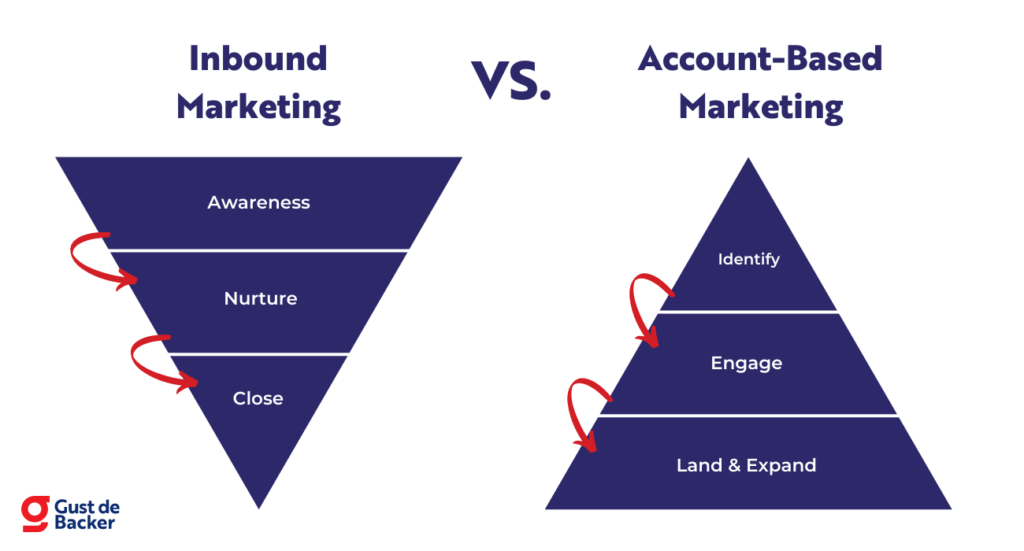
Account-Based Marketing (ABM) targets specific companies as individual markets. Instead of targating everyone,ABM fouceses on high-value companies Marketing and sales teams work together to personalize campaigns for each company’s unique needs and decision-makers.
A cybersecurity firm, for example, might create custom webinars and whitepapers for Fortune 500 financial institutions rather than using generic content. The goal is not to generate many leads but to engage the most promising prospects deeply.
What Is Broad Inbound Marketing?
Broad inbound marketing attracts potential customers by offering helpful content that addresses common industry issues. It uses blogs, SEO, social media, webinars, and emails to draw in a wide audience organically.
For example, a cloud software company might write articles about digital transformation and provide downloadable guides to educate IT professionals. This strategy builds brand awareness and nurtures leads over time, creating a steady flow of prospects.
Key Differences Between Account-Based Marketing (ABM) vs Inbound Marketing
| Feature | Account-Based Marketing (ABM) | Broad Inbound Marketing |
|---|---|---|
| Targeting | Specific high-value accounts | Broad audience with shared interests |
| Personalization | Highly customized messaging | General content for larger groups |
| Sales Alignment | Close marketing-sales collaboration | Marketing-led until leads qualify |
| Lead Volume | Fewer, high-quality leads | Higher number of leads |
| Measurement Metrics | Account engagement, revenue, pipeline | Website traffic, lead generation |
When Should You Choose ABM?
ABM works best for businesses selling high-value products with long sales cycles and multiple decision-makers. Industries like enterprise software, consulting, cybersecurity, and finance often benefit from ABM.
Consider ABM if you:
- Target a small list of high-value clients
- Need deep personalization in marketing
- Have sales teams aligned closely with marketing
- Aim for higher ROI on fewer leads
Though it requires more effort, ABM often builds stronger customer relationships and boosts revenue.
When Is Broad Inbound Marketing More Effective?
Inbound marketing suits companies aiming to build brand awareness and attract prospects at scale. This approach works well for businesses entering new markets, launching products, or focusing on education.
Use inbound marketing if you want to:
- Generate consistent website traffic
- Educate a broad audience
- Build a scalable sales funnel over time
While conversion rates may be lower than ABM, inbound marketing steadily grows your brand’s reach.
Combining Account-Based Marketing (ABM) vs Inbound Marketing: A Powerful Strategy
Many successful B2B companies blend both strategies to maximize growth.
- Inbound marketing attracts and educates a wide audience.
- Data from inbound campaigns identify high-intent prospects.
- ABM then targets these prospects with personalized campaigns.
For example, a software company might publish SEO-friendly content to attract thousands of visitors. When large enterprises show repeated interest, the company launches ABM campaigns with custom emails and demos for key decision-makers.
This mix of Account-Based Marketing (ABM) vs Inbound Marketing balances scalability with precision.
How to Measure Success for Both Strategies
Tracking the right metrics is essential to improve marketing efforts.
Key ABM metrics:
- Account engagement
- Meetings with decision-makers
- Pipeline growth and deal size
- Revenue from target accounts
Key inbound marketing metrics:
- Organic traffic and keyword rankings
- Content engagement and downloads
- Lead generation and conversion rates
- Email campaign performance
Final Thoughts: Choosing Between Account-Based Marketing (ABM) vs Inbound Marketing
There is no one-size-fits-all answer in the Account-Based Marketing (ABM) vs Inbound Marketing debate. Your choice depends on your business goals, target audience, resources, and sales cycle complexity.
- ABM is ideal for targeting high-value accounts with personalized engagement.
- Inbound marketing builds long-term brand visibility and a broad lead funnel.
Most B2B businesses gain the greatest advantage by combining both. Inbound marketing creates awareness and demand, while ABM converts valuable opportunities into loyal customers. This alignment builds a sustainable, revenue-driven marketing engine.
learn more about digital marketing services