

If you have never taken the time to check your marketing you are not alone.. You are also not seeing the whole picture. A digital marketing check is when you look at every way you market your business online like search engine optimization, content, social media, paid media and email. You measure these things against your goals. What your competitors are doing. If you also look at what your competitorsre doing you get a plan for what to do next.
Why Check Your Digital Marketing?
Making marketing decisions without knowing what is working is expensive. If you do not check your marketing you might be wasting money on things that are not working. A regular check can help you catch these problems before you waste much money. 44% Of marketers check their campaign performance every week. This means most teams are making decisions based on data. A regular check can help fix this problem.
If you check your marketing you can make better decisions. Marketers who use tools to help with marketing decisions see a big increase in what they get done and the money they make. Companies that use these tools also see an increase in sales and a decrease in the cost of getting customers. Even simple checks, like looking at your content can make a difference. 53% Of marketers saw engagement after checking their content.
How Often Should You Check Your Digital Marketing?
There is no one answer to how often you should check your digital marketing.. A good idea is to do a big check once a year before you plan your budget. You should also do checks every quarter just looking at one or two areas like search engine optimization or social media. If your business is growing fast or if you are in a market you might need to do a big check every quarter. If something big happens, like a change in leadership or a new competitor you should also do a check.
The Step-by-Step Process
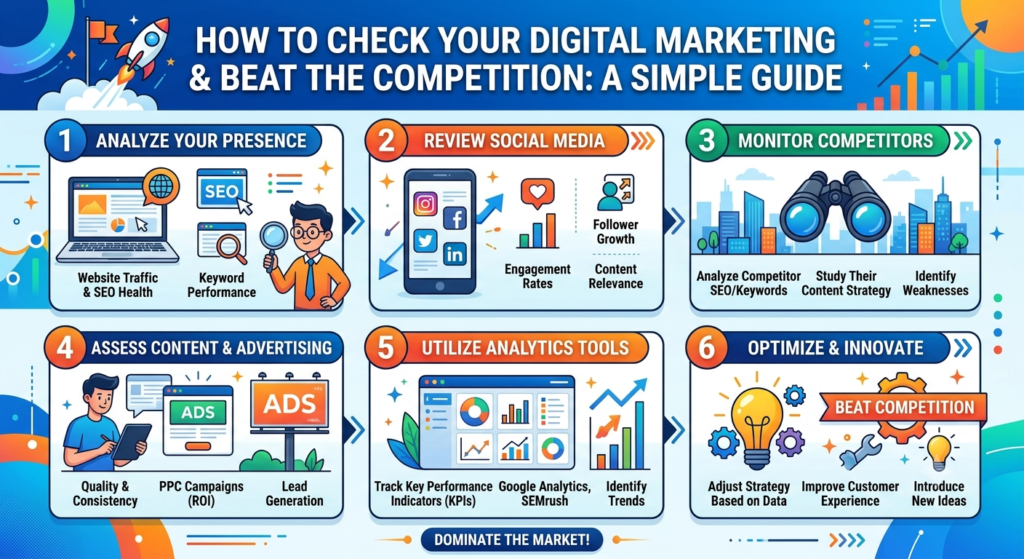
- Decide what you want to achieve and how you will measure it. What does success mean for each way you market your business online?
- Make a list of all the ways you market your business online. This includes your website, media paid search and social email and any other ways you market your business.
- Get all the data you need. This includes data from Google Analytics, Search Console, ad platforms, social media insights and your customer relationship management system.
- Check each way you market your business online. Look at how each one is working if there are any technical problems and if the content and messages are good.
- Compare yourself to your competitors. Look at what your competitorsre doing online and how you compare to them.
- Figure out what you need to do to improve. Look at where you’re behind your competitors and what you need to do to catch up.
- Make a plan to fix the problems and take advantage of opportunities. Decide what to do and who will do it.
Hands-On Exercise
Pick a business you know well. Spend some time checking least three ways they market their business online. Look at what’s working what is not and how they compare to one of their competitors. Then come up with a plan to fix the problems and take advantage of opportunities.
Checklist and Template Starters
Digital Marketing Checklist:
- Decide what you want to achieve and how you will measure it for each way you market your business online
- Make sure you have all the data you need
- Check your search engine optimization, content, social media and paid media
Competitor Comparison:
- Look at what your competitorsre doing online
- Compare yourself to them
- Decide what you need to do to catch up
Frequently Asked Questions
- What is the difference between checking your marketing and comparing yourself to your competitors? Checking your marketing is looking at what you are doing and how well it is working. Comparing yourself to your competitors is looking at what they’re doing and how you compare to them. You need to do both to get a picture.
- What are the best tools to use? Google Analytics and Search Console are good for looking at your data. SEMrush, Ahrefs and Similarweb are good, for comparing yourself to your competitors.
- How do you turn what you find into a plan? Decide what to do who will do it and when you will check to see if it is working.