
Content Brief: Learn to Generate Qualified Leads For Any Business
– Topic
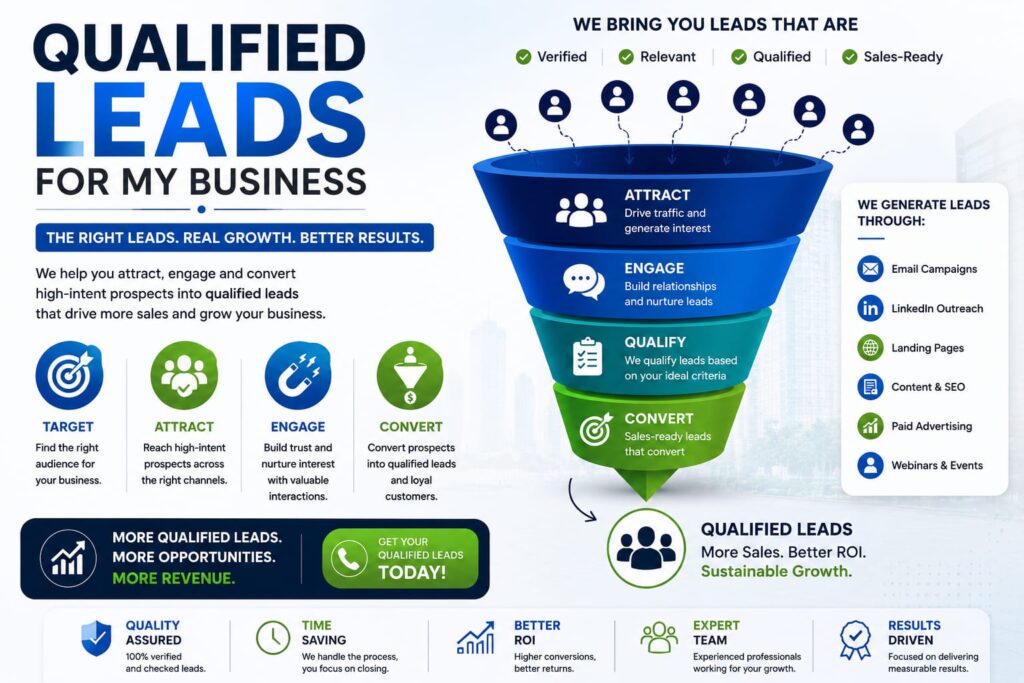
Learn to generate leads for any business through a comprehensive bottom-funnel training program.
– Goal
Equip learners with actionable methods to identify, qualify and convert high-quality leads into customers.
– Content Type
Comprehensive training guide
Modules, checklists, case studies, templates and a practical playbook
– 5 Title Suggestions
Mastering Qualified Lead Generation: A Comprehensive Training for Any Business
From Prospect to Customer: The Ultimate Lead Qualification Training
More Deals: The Definitive Training for Qualified Leads
Qualified Lead Systems: A Step-by-Step Training for Any Market
The Playbook: Generate, qualify and convert leads into customers
– Target Audience
Marketing and sales professionals
SDRs, sales managers, demand generation teams
Founders and business owners
Anyone responsible for converting leads to customers
– Related Keywords
Qualified leads, lead qualification, sales funnel, ICP lead scoring lead nurturing, conversion rate
– Average Word Count
2,000 – 3,000 Words
– Related Questions
What defines a qualified lead?
How do you qualify leads
What lead scoring model works best?
What metrics indicate successful lead generation?
Which tools support lead qualification and conversion?
– Related Statistics
Many marketers say generating qualified leads is their top challenge
Lead scoring and qualification can improve conversion rates
B2B sales cycles typically involve multiple touches
– Notes:
Include practical templates
Consider adding real-world case studies
Mastering Qualified Lead Generation: A Comprehensive Training for Any Business
Why Qualified Lead Generation Matters
Generating leads is easy.. Generating qualified leads that can become customers is where most businesses struggle.
Many companies invest heavily in advertising. Still fail to generate revenue because they focus on lead quantity instead of quality.
This is where Bottom-of-Funnel lead generation becomes critical.
It is the stage of the sales funnel where prospects have already identified their problem and are actively considering making a purchase decision.
The goal at this stage is not simply attracting attention. Helping qualified prospects choose your product or service.
A strong strategy helps businesses:
• Identify high-intent prospects
• Improve sales conversion rates
• Reduce wasted marketing spend
• Shorten sales cycles
• Increase customer acquisition ROI
This comprehensive training guide explains how businesses can build a system to generate, qualify and convert leads into customers.
________________________________________
Module 1: Understanding Qualified Leads
What Defines a Qualified Lead?
A qualified lead is a prospect who matches your business requirements and has a probability of becoming a customer.
Not every person who downloads an ebook or visits your website is a lead.
A qualified lead usually meets three conditions:
1. Fit
The prospect matches your Ideal Customer Profile
2. Intent
The prospect shows buying signals.
3. Readiness
The prospect has the resources and authority to purchase.
________________________________________
Module 2: Building Your Ideal Customer Profile
Before generating leads businesses need to define who they want to attract.
An Ideal Customer Profile helps marketing and sales teams focus their efforts on prospects with the conversion potential.
A clear profile prevents businesses from wasting resources on prospects.
________________________________________
Module 3: Lead Generation Strategies
1. High-Intent Landing Pages
Landing pages should target users who’re close to making a decision.
A strong landing page includes:
Clear Value Proposition
Strong CTA
Trust Elements
2. Outbound Lead Generation
Outbound strategies help businesses proactively reach buyers.
Effective methods include:
• Cold email campaigns
• LinkedIn outreach
• Account-based marketing
3. Inbound Lead Generation
Inbound strategies attract prospects already searching for solutions.
Examples:
• SEO-focused service pages
• Comparison articles
• Buyer guides
________________________________________
Module 4: Lead Scoring Model, for Success
Lead scoring helps businesses figure out which prospects deserve sales attention.
Example Lead Scoring Rubric
Activity Score
Visits pricing page +10
Downloads case study +15
Requests demo +30
Opens emails +5
Matches Ideal Customer Profile (ICP) +20
Wrong industry -10
No engagement for 60 days -15
Lead Classification:
* 0–30 Points: Cold Lead
* 31–60 Points: Marketing Qualified Lead (MQL)
* 61+ Points: Sales Qualified Lead (SQL)
This system helps sales teams focus on the opportunities.
________________________________________
### Module 5: BOFU Lead Qualification Framework
A good qualification process helps sales teams avoid wasting time on fit prospects.
One popular framework is BANT:
* Budget: Does the prospect have money?
* Questions:
• What budget range have you set aside?
• Have you spent money on solutions before?
* Authority: Are you talking to the decision-maker?
* Questions:
• Who else is involved in this decision?
• Who approves the purchase?
* Need: Does the prospect have a business problem?
* Questions:
• What challenge are you trying to solve?
• What happens if this problem continues?
* Timeline: When do they plan to implement?
* Questions:
• When would you like to start?
• Is there a deadline?
________________________________________
### BOFU Qualification Script Template
#### Opening
“Thanks for taking the time today. I want to understand your challenges, goals and whether our solution can really help.”
#### Problem Discovery
* What challenges are you facing now?
* How are you solving this today?
* What results are you looking for?
#### Qualification
* Who is involved in the decision-making process?
* What timeline are you working with?
* What budget range are you considering?
#### Next Step
“Based on what we discussed I think there may be an opportunity to help. The next step would be…”
________________________________________
### Module 6: Discovery Call Checklist
A successful discovery call should uncover:
* Business Situation
• process
• Existing challenges
• Previous solutions tried
* Goals
• Desired outcome
• Success measurement
• Business impact
* Buying Process
• Decision-makers
• Budget approval
• Timeline
#### Closing Questions
* What would prevent you from moving
* What questions do you still have?
* What does the ideal solution look like?
________________________________________
### Module 7: Aligning Marketing and Sales Teams
Many businesses lose opportunities because marketing and sales work separately.
A successful BOFU system requires:
* Definitions: Marketing and sales should agree on:
• What is a Marketing Qualified Lead (MQL)?
• What is a Sales Qualified Lead (SQL)?
• When should sales follow up?
* CRM Integration: A CRM helps track:
• Lead source
• Engagement history
• Sales activity
• Conversion rates
Popular CRM platforms include:
* HubSpot
* Salesforce
* Zoho CRM
* Communication: Weekly meetings should review:
• Lead quality
• Conversion rates
• Campaign performance
• Sales feedback
________________________________________
### BOFU Metrics That Measure Success
Businesses should track:
* Lead-to-Customer Conversion Rate: Measures how many leads become paying customers.
* Sales Qualified Lead Volume: Shows whether marketing is generating opportunities.
* Customer Acquisition Cost (CAC): Measures the cost required to acquire a customer.
* Sales Cycle Length: Shows how quickly leads move through the funnel.
* Revenue Attribution: Identifies which campaigns generate revenue.
________________________________________
### Mini Case Study: Improving Lead Quality Through BOFU Optimization
A B2B software company generated thousands of monthly leads through advertising but had conversion rates.
The company implemented:
* ICP refinement
* Lead scoring
* Personalized email sequences
* Sales qualification calls
Results:
* Sales team focused on higher-quality opportunities
* Less time spent chasing fit leads
* Improved meeting quality
* conversion efficiency
The lesson:
More leads do not always mean more revenue. Qualified leads create better business outcomes.
________________________________________
### 30/60/90-Day BOFU Implementation Plan
#### First 30 Days: Foundation
Goals:
* Define Ideal Customer Profile (ICP)
* Create qualification criteria
* Setup CRM tracking
* Audit current funnel
Actions:
* Analyze existing customers
* Identify buying patterns
* Create lead scoring model
________________________________________
#### Days 31–60: Build Campaigns
Goals:
* Launch BOFU campaigns
* Improve conversion points
Actions:
* Create landing pages
* Develop case studies
* Launch campaigns
* Optimize CTAs
________________________________________
#### Days 61–90: Scale and Improve
Goals:
* Increase conversions
* Improve Return, on Investment (ROI)
Actions:
* Analyze performance data
* Improve messaging
* Automate follow-ups
* Train sales teams
________________________________________
### Build a Predictable Qualified Lead Generation System
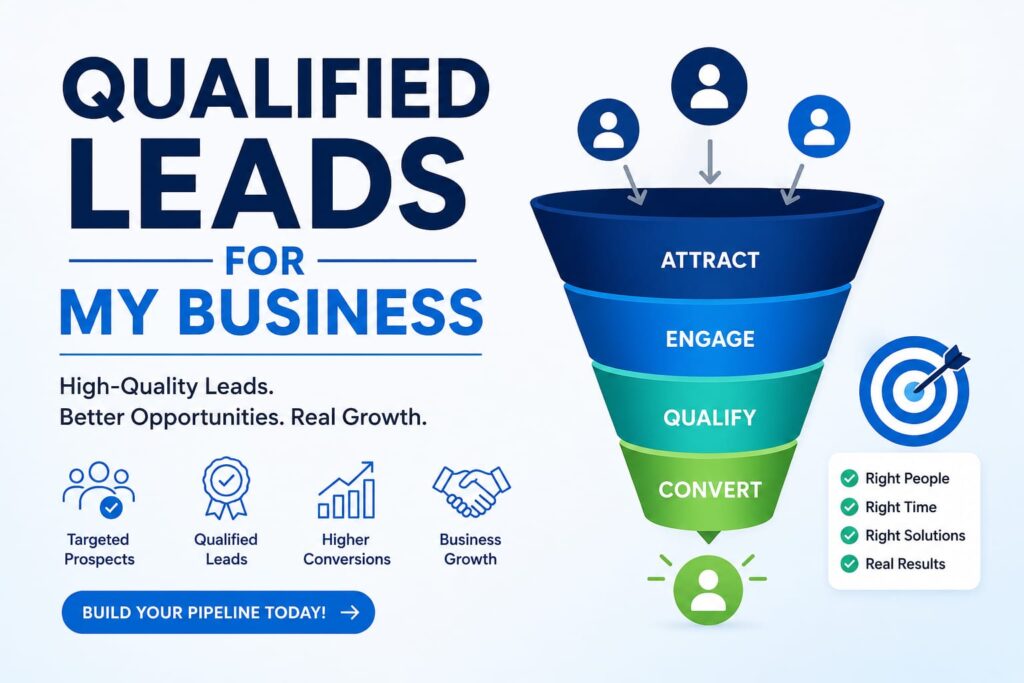
Successful businesses do not rely on random lead generation. They build systems that identify the right prospects understand their needs and guide them toward purchasing decisions.
A strong BOFU strategy combines:
* Clear ICP definition
* Lead scoring
* Sales qualification
* Personalized messaging
* CRM automation
* Continuous optimization
Whether you run a B2B company, ecommerce business, agency or startup mastering BOFU lead generation helps turn marketing efforts into revenue growth.
The goal is not simply to generate leads.
The goal is to generate the leads at the right time with the right approach.
https://yourwebsite.com/qualified-lead-generation-services
https://blog.hubspot.com/marketing/lead-generation?utm_source=chatgpt.com