

If you are a broker or a developer you already know the truth about this business: the property does not sell itself. Real Estate Lead Generation Neither do you. Somewhere between the “For Sale” sign and the closing table there is a marketing process that does the lifting. And for a lot of teams that process is not well planned. A boosted Instagram post here a Zillow lead a spreadsheet that nobody updates.
This is why we built a course around one specific problem: how do brokers and developers generate leads that actually turn into deals. Not just names on a list. Real estate marketing is about generating leads but it is also about generating leads that are worth having.

The Real Cost of “Getting More Leads”
Why Lead Quality Beats Lead Volume
Everyone wants more leads. Yet almost nobody asks whether those leads are worth having. In fact, that distinction matters more than most marketing budgets admit. Real Estate Lead Generation For instance, the cost per lead in real estate can vary widely — anywhere from a few dollars for organic content to several hundred dollars in competitive areas, depending on the channel, the market, and how ready to buy the lead actually is.
Generally speaking, buyer leads tend to be cheaper than seller leads. Therefore, that difference should shape where you put your next dollar. After all, the point is not chasing the number on the dashboard; instead, it is understanding what you are actually paying for. In other words, a cheap lead that never returns a call is ultimately more expensive than one that closes.
That is why the mindset shift behind this course matters so much: stop optimizing for volume, and start optimizing for lead quality — as well as what happens after the lead comes in. Ultimately, real estate marketing mastery is about generating high-quality leads and turning them into deals.
Who This Is Actually For
To be clear, this is not a “marketing 101” course dressed up in real estate language. Instead, it is built for:
- Brokers and brokerage teams who need a process instead of a pile of one-off tactics
- Developers and project marketers juggling pre-launch buzz, mid-project momentum, and closeout urgency — three very different marketing jobs inside one project
- Small agencies trying to compete with bigger budgets by being sharper, Real Estate Lead Generation not louder
- Marketing coordinators who have been handed “get us more leads” as a job description with no framework attached
So, if any of that sounds familiar, the gap you are feeling is not a talent gap. Rather, it is a systems gap. After all, real estate marketing requires a planned system in order to generate high-quality leads.
What’s Actually Inside
Overall, the course is built as short, focused modules think 15-20 minutes each, six to eight modules total, rather than one long lecture you will never finish. Real Estate Lead Generation Specifically, each module pairs a video walkthrough with a slide deck you can revisit, along with templates you can put to work the same day:
- Building a Real ICP. Not “millennials who like houses.” Instead, this is a working ideal customer profile that separates first-time buyers, move-up buyers, investors, and for developers construction speculators versus end-users. Because each of these groups responds to different messaging, this distinction matters.
- Lead Magnets That Aren’t Junk. Think market reports, neighborhood guides, ROI calculators for investors, and floor plan previews for developments. Ultimately, the goal is an offer someone actually wants before you ask for their contact info.
- Cold vs. Warm Outreach. This module covers when a cold call is still worth making, when it is a waste of everyone’s time, and how to build warmth into your pipeline so that fewer conversations start from zero.
- Email Nurture Sequences. Here you get a done-for-you sequence structure, since most agents either email too little or blast the same generic listing update to everyone.
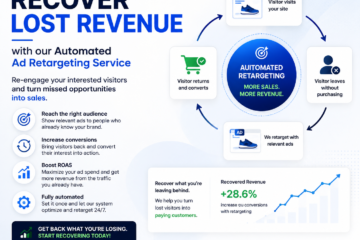
- Paid Channels, Assessed. This section looks at PPC, social ads, and retargeting, with real talk about what each channel is good at and where it quietly burns budget.
- Measurement That Means Something. Finally, you get a simple dashboard for tracking cost per lead, lead-to-appointment rate, and lead-to-close rate, so that you know which parts of the process are actually working.
In the end, every module closes with a template the ICP worksheet, the email sequence, the lead magnet outline plus a short quiz to make sure it actually stuck.
Some Numbers Worth Knowing
Below are a few benchmarks that come up constantly in the course, so that you are not planning in the dark:
- For example, real estate email marketing typically sees open rates somewhere in the 15-25% range, with click-through rates closer to 1-5%. Real Estate Lead Generation This is a reminder that relevance and list quality matter more than send frequency.
- Meanwhile, lead-to-deal conversion for inbound real estate leads generally sits around 2-5%, though top-performing brokers report conversion rates over 12%, compared to an industry average closer to 4.7%. In other words, the gap between “average” and “good at this” is enormous.
- Similarly, real estate PPC ads convert at roughly 4.4% in Google search, which is higher than the average across all industries at 2.7%. So that’s good news if your paid search strategy is dialed in, and less good news if it is an afterthought.
- Furthermore, nurtured leads consistently outperform one-touch outreach. Therefore, if your “follow-up” is a single email after the initial inquiry, you are leaving conversions on the table.
That said, none of these numbers are destiny. Rather, they are a starting line — a way to know whether your process is underperforming, average, or genuinely working.
The Real Point
Ultimately, this course is not selling a fantasy about leads falling into your inbox on autopilot. Instead, it is a template-driven way to build a process you actually understand — one where you know what a lead costs, Real Estate Lead Generation why it converts (or doesn’t), and what to fix when the numbers dip.
Brokers and developers who win in this market long-term are not the ones spending the most. They are the ones who know where every dollar and every lead is going. And who fix the leaky parts of the process before scaling it. Sell Homes If that is the kind of clarity you’re after this is where you start. Real estate marketing mastery is, about generating high-quality leads and turning