
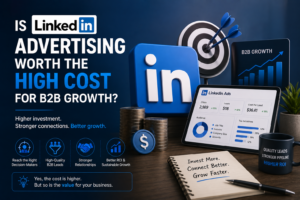
When you open your LinkedIn Campaign Manager for the time the cost per click can be shocking. Five, seven or even nine dollars per click is a lot, especially when you compare it to Facebook or Google where you might pay a fraction of that. If you are used to paying for consumer ads it feels like you are being overcharged to show up in someones feed.
The cost per click is just a number. It tells you how much you paid, not what you got.. What you get from LinkedIn if you do it right is a different kind of lead than what you get from cheaper platforms.
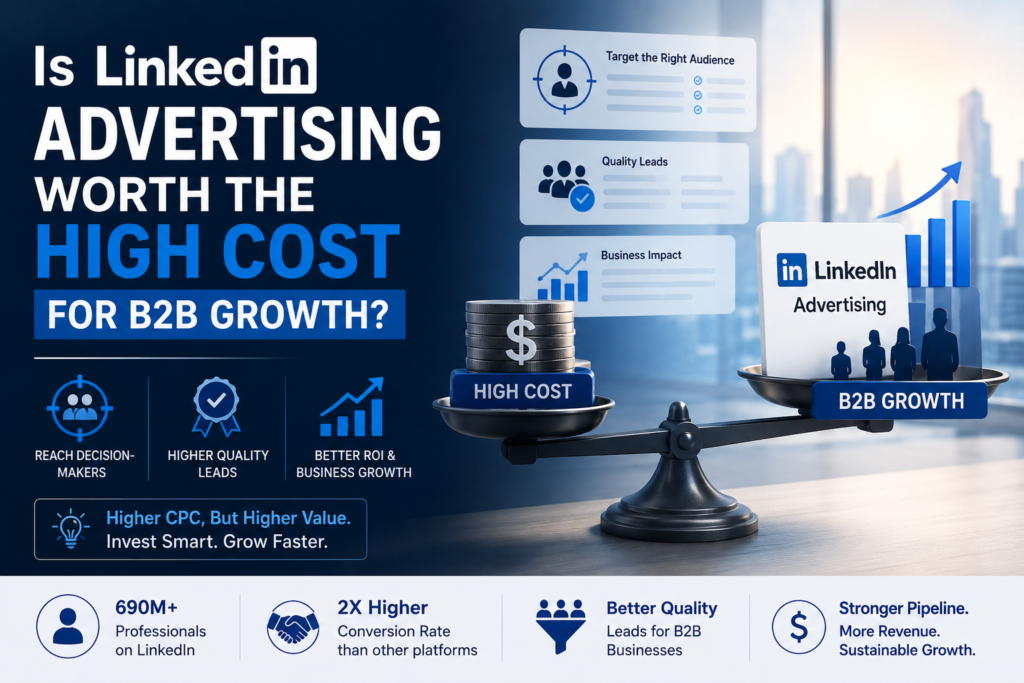
Why the Click Costs More. And Why Thats Not Necessarily News
The people on LinkedIn are a specific group and thats what makes them valuable. You are not competing with a lot of ads for attention. You are paying to reach someone with a specific job title at a specific level in a specific industry. That’s expensive because its hard to find these people not because the platform’s inefficient.
When you look at the numbers you can see that LinkedIn produces leads but they are more likely to be interested in what you have to offer. The click-through rate for Sponsored Content is usually 0.4% to 0.6%, which might not seem like a lot.. When you compare who is clicking you can see that it’s worth it. A good landing page with a form can get you a conversion rate of 8% to 20% or more for qualified B2B leads. That’s hard to find on platforms that are meant for an audience, not just professionals.
So the question is not “is LinkedIn expensive.” It’s “expensive compared to what.”
When the High Cost’s Worth It
There’s a simple way to figure this out: look at how much you make from each sale and how long it takes to make a sale. If you are selling something like a $500 product that people buy on the same day LinkedIn might not be the best choice. You need to reach a lot of people and cheaper platforms can do that faster.. If you are selling something that costs a lot like a $40,000 contract and the buyer is a director or VP LinkedIns targeting is worth it. One good lead that turns into a sale makes the high cost per click seem irrelevant.
The sales process for B2B deals can take three to six months or longer so the goal is not to make a sale right away. It’s to get in front of the person early so you are already talking to them when they start looking for vendors. That’s where LinkedIn shines: not by being cheap. By helping you get to the right people early.
Some industries, like software, financial services, manufacturing and professional services see this work out well. That’s because their buyers are the professionals that LinkedIn is meant to reach.
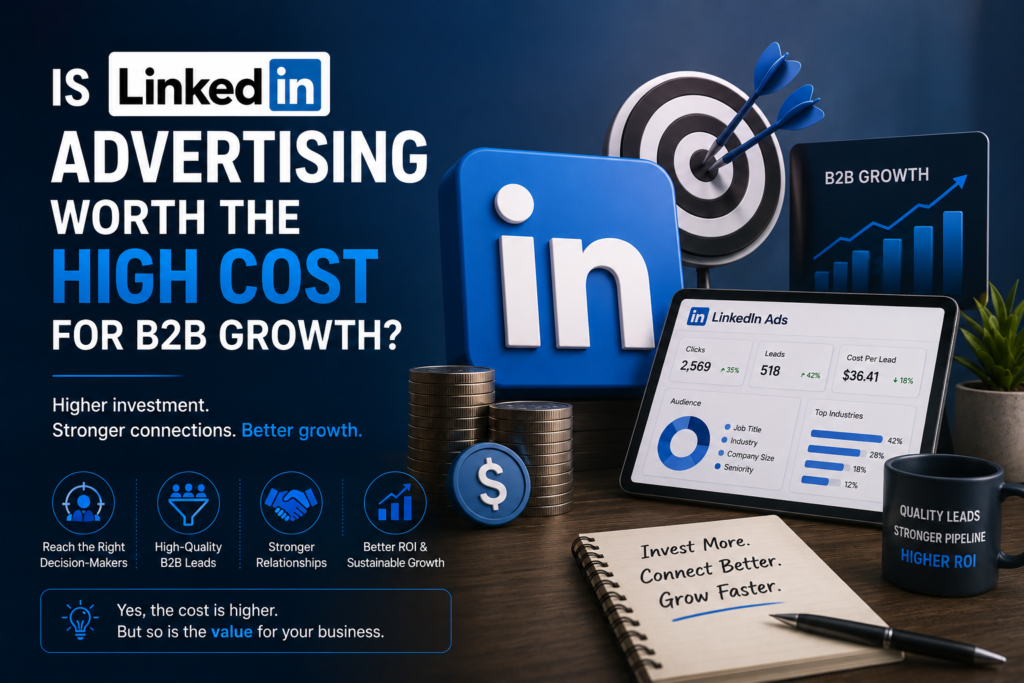
When to Try Something Else
If you have been using LinkedIn for three months and your cost per lead is going up and the leads you are getting are not what you wanted thats a sign to either try harder to target the people or move your budget to a different platform. LinkedIn is not right for every B2B business. It’s right for businesses where the dealsre big and complex and its worth paying for precision.
A Quick Framework Before You Commit Budget
- Deal Size Check: Is your sale big enough to make up for the high cost per lead?
- Buyer Clarity: Do you know exactly who you are trying to reach?
- Format Test: Try different types of ads like Sponsored Content, InMail and Dynamic Ads to see what works best.
- Landing Page Match: Make sure your landing page matches your ad. Its easy for people to take the next step.
- Measurement Setup: Make sure you are tracking everything from UTMs to CRM integration and you have a way to measure whats working.
- Evaluation Window: Give your campaign least 90 days and look at the pipeline numbers not just the click-through rate.
The Bottom Line
A high cost per click is not a thing on its own. It’s just a number that only means something when you compare it to the quality of the leads the size of the deals and the pipeline. For a lot of B2B companies LinkedIns expensive clicks turn into some of the qualified pipeline they generate all quarter. For others those with smaller deals or high-volume businesses it’s not the right tool. The way to find out which group you are in is to run a test measure it and let the pipeline numbers decide, not the cost, per click.