

Running a digital marketing agency can feel like you’re constantly juggling priorities. One moment you’re on a client strategy call, the next you’re chasing new leads, reviewing campaign performance, or solving an unexpected issue for your team. As your agency grows, the workload only becomes more demanding.
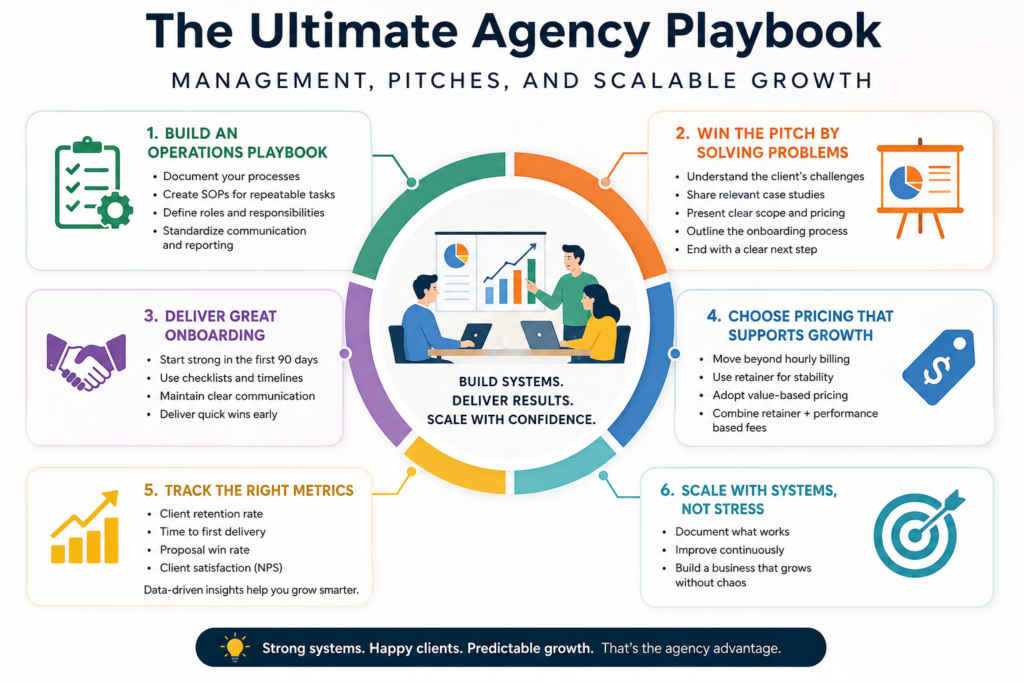
Many agency owners assume growth comes from landing more clients. In reality, sustainable growth comes from building better systems. The agencies that scale successfully aren’t always the biggest or the most creative—they’re the ones with clear processes for managing projects, onboarding clients, and delivering consistent results.
If you want your agency to grow without the daily chaos, here’s where to focus.
Why Many Agencies Hit a Growth Ceiling
Almost every agency reaches a stage where things start feeling harder instead of easier. Projects become difficult to manage, onboarding new clients takes too much time, and closing new deals feels inconsistent.
The problem usually isn’t a lack of talent or effort. It’s the absence of repeatable systems.
When your business depends on team members remembering every process or handling every client differently, mistakes become more common as your workload increases. Small operational issues slowly turn into missed deadlines, frustrated clients, and lost revenue.
The good news is that these challenges can be solved with better processes—not longer working hours.
Create an Operations Playbook Before You Need One
Think of your operations playbook as your agency’s instruction manual. It documents how your team works so everyone follows the same process, regardless of who’s handling the project.
A practical operations playbook should include:
- Standard operating procedures (SOPs) for recurring tasks
- Clear roles and responsibilities for every team member
- Communication guidelines for clients and internal teams
- A list of tools and software your agency relies on
When every project follows a consistent workflow, your team spends less time figuring out what to do next and more time producing quality work. Clients notice this consistency, and it builds confidence in your agency.
Focus on Solving Problems During Your Pitch
One of the biggest mistakes agencies make is treating a pitch deck like a company brochure.
Prospects don’t want to hear everything about your agency—they want to know whether you understand their business challenges and have a plan to solve them.
A strong pitch should guide the conversation naturally by:
- Clearly explaining the client’s biggest challenge.
- Showing relevant examples or case studies.
- Presenting a simple pricing structure and scope.
- Explaining what happens after they say yes.
- Ending with one clear next step.
When your presentation focuses on the client’s goals instead of your services, pricing becomes a much easier conversation.
Great Onboarding Builds Long-Term Clients
The first few weeks after signing a client often determine how the entire relationship will unfold.
If communication is unclear or deliverables are delayed, clients quickly start questioning whether they made the right decision.
A smooth onboarding process creates trust from day one.
Simple improvements like kickoff checklists, welcome documents, shared timelines, and regular progress updates help clients feel informed and confident throughout the process.
The faster you deliver your first meaningful result, the stronger the relationship becomes.
Choose a Pricing Model That Supports Growth
Many agencies start by charging hourly because it’s simple.
As the agency grows, however, hourly billing often limits profitability. You’re constantly trading time for money.
Retainer pricing offers more predictable monthly revenue and allows you to build stronger long-term partnerships.
Many successful agencies are also moving toward value-based pricing, where fees reflect the results delivered rather than the number of hours worked.
For many businesses, a combination of both works best—a reliable monthly retainer with additional fees tied to measurable outcomes.
This approach creates stability while leaving room for higher earnings as client success grows.
Measure the Numbers That Matter
Revenue is important, but it doesn’t tell the whole story.
To understand whether your agency is actually improving, keep an eye on metrics like:
- Client retention rate
- Time taken to deliver the first project
- Proposal or pitch win rate
- Client satisfaction or Net Promoter Score (NPS)
These numbers help you identify potential problems before they become serious. They also show which parts of your business are improving and which need more attention.
Final Thoughts
Growing an agency isn’t about working around the clock or constantly chasing new clients. It’s about creating systems that make your business easier to manage as it expands.
When you document your processes, improve your client pitches, streamline onboarding, and adopt a pricing model built for long-term growth, scaling becomes much more manageable.
Success doesn’t come from doing everything yourself. It comes from building a business that delivers great results consistently—no matter how much your agency grows.
Showing relevant examples or case studies created with tools like Canva or Google Slides