

SEO vs GEO compares traditional search rankings with AI-powered citations and explains how search visibility is changing in the age of ChatGPT and AI search.
If you have spent a lot of time making a search engine optimization plan using keywords and links and trying to get to the top of the page, you might be wondering if any of that still works with the rise of artificial intelligence search engines. The simple answer is yes, it mostly still works.
When you compare traditional search engine optimization to Generative Engine Optimization, you will see that there are some real differences in how people discover your brand.
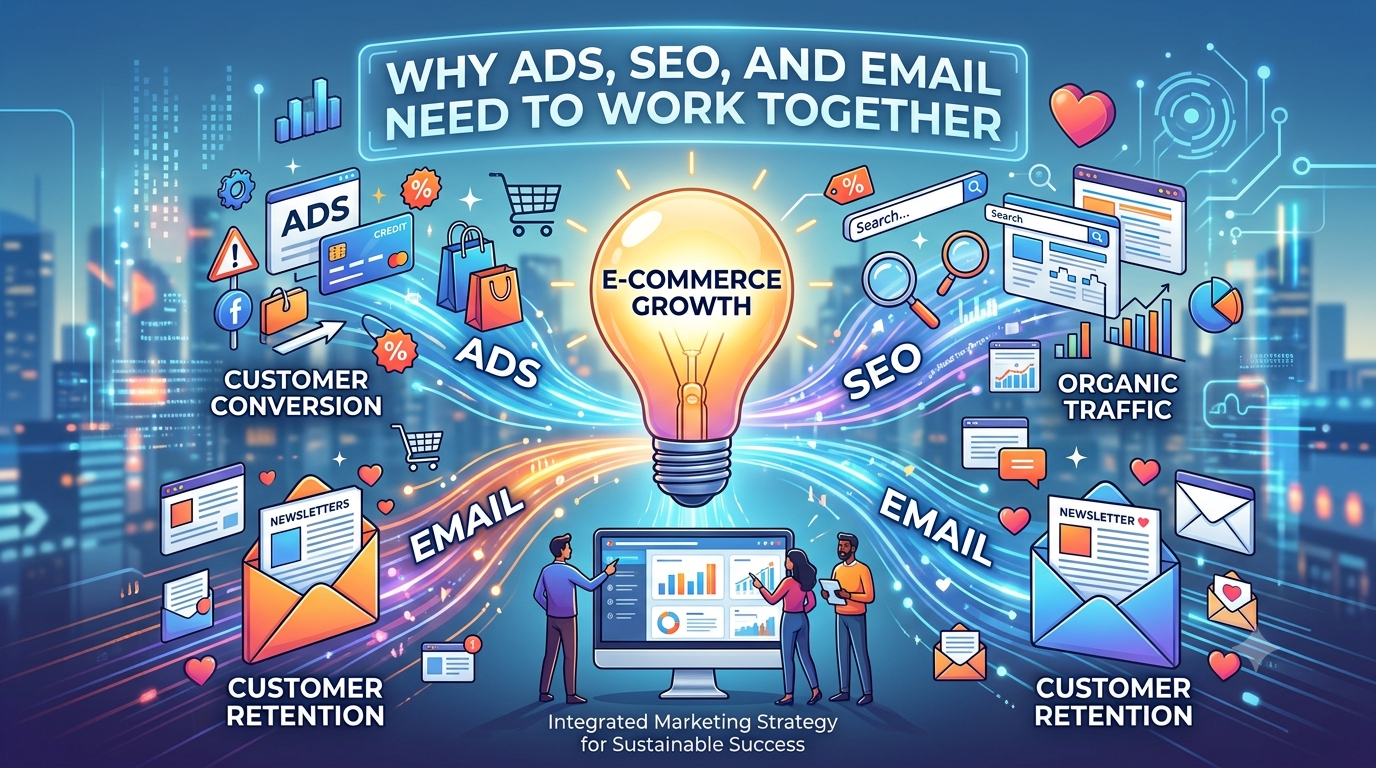
If you do not pay attention to those differences, you could miss out on a growing number of people who find information through artificial intelligence generated answers.
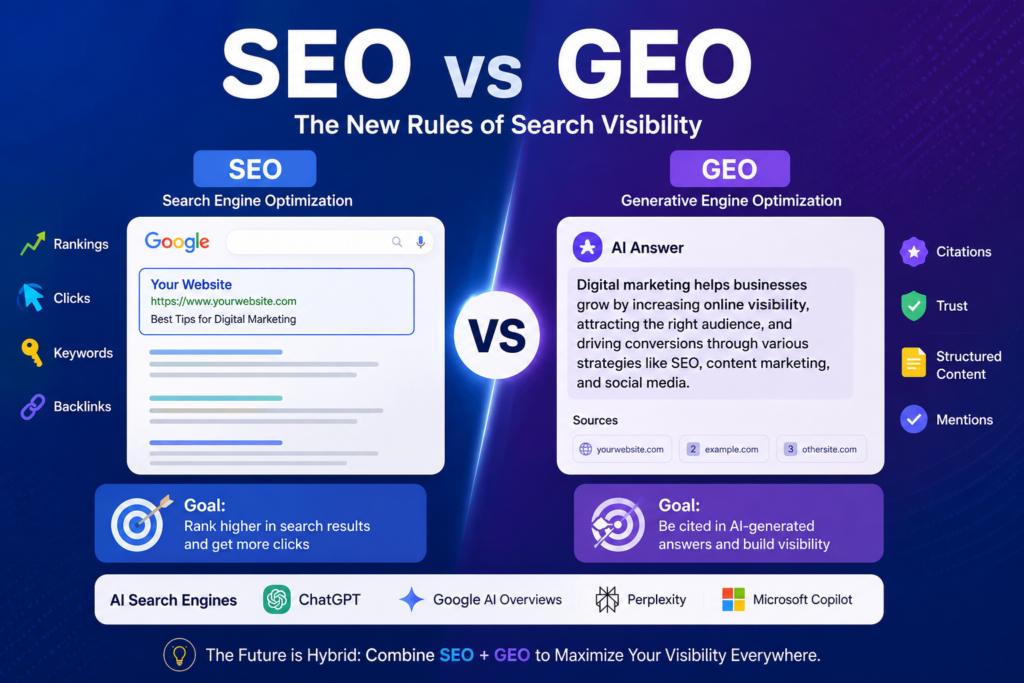
The main difference is getting a page to rank high versus being quoted in an answer.
Campare to SEO vs GEO ?
Traditional search engine optimization is designed to get a page ranked higher in search results. Your page appears in a list of links and competes with other pages based on relevance, authority, user experience, and many other factors.
Generative Engine Optimization is different. The goal is to have your content included in an artificial intelligence generated answer. It is even better when the answer engine cites your content as the source.
One strategy focuses on where your page appears in search results. The other focuses on whether your information gets used inside an answer.
if you want more info about SEO vs GEO other resource like AI Search Trends Report.
How Google Search Still Works
Google’s ranking systems evaluate many signals to decide where a page appears in search results.
These signals include:
- Links pointing to your page
- Keyword relevance
- Page speed
- Content quality
- User experience
- Technical search engine optimization factors
After Google ranks the results, users decide which links they want to click.
Multiple websites can appear on the same search results page, giving users several options to explore.
How Artificial Intelligence Search Works
Artificial intelligence answer engines such as ChatGPT, Google AI Overviews, Perplexity, and Microsoft Copilot work differently.
Instead of presenting a list of links, they gather information from multiple sources and generate a single answer.
Users often receive the information they need without visiting another website.
The artificial intelligence system effectively chooses which sources to use before the user even sees them.
That is why citations and mentions have become so valuable in Generative Engine Optimization.
Search Engine Optimization Versus Generative Engine Optimization (SEO vs GEO) :
Traditional Search Engine Optimization
- Focuses on achieving high rankings in search results
- Measures success through rankings and clicks
- Relies heavily on keywords and content optimization
- Uses backlinks to establish authority
- Encourages users to visit your website
- Competes for visibility on search engine results pages
Generative Engine Optimization
- Focuses on earning citations in artificial intelligence generated answers
- Measures success through mentions and citations
- Prioritizes direct answers and factual information
- Uses credibility, sources, and structured information to build trust
- Allows users to consume information without clicking
- Competes for inclusion within generated responses
What Stays the Same?
Many core search engine optimization principles still matter.
A strong website structure remains important.
Clear headings help both users and machines understand content.
Fast loading pages improve usability.
Well organized content performs better across search engines and artificial intelligence systems.
Artificial intelligence models often prefer content that is already easy to read and understand. As a result, many good search engine optimization practices continue to support Generative Engine Optimization.
If you are new to this topic, our guide on what Generative Engine Optimization is provides a useful starting point before moving into more advanced strategies.
The Biggest Change: Writing for Extraction
One of the most important differences is how content gets consumed.
Traditional search engine optimization often rewards comprehensive content that keeps visitors engaged.
Generative Engine Optimization favors content that answers questions quickly and clearly.
Artificial intelligence models often extract information from content that:
- Provides direct answers
- Uses clear language
- Includes specific facts
- Supports claims with credible sources
- Organizes information logically
A concise answer followed by supporting details often performs better than content that hides key information deep within a long article.
Which Strategy Should You Focus On?
You should not choose one over the other.
Google still drives a significant amount of website traffic.
At the same time, artificial intelligence search continues to grow rapidly.
Brands that ignore Generative Engine Optimization risk becoming invisible inside a channel that will likely become more influential over time.
The strongest approach combines both strategies because they share many of the same foundations.
Conclusion
The discussion around search engine optimization versus Generative Engine Optimization is not really about choosing sides. It is about understanding that visibility now happens in two different environments. One environment relies on rankings and clicks. our topic is SEO vs GEO if you want more information about to click here.
The other relies on citations and inclusion within artificial intelligence generated answers. Businesses that understand both systems will be in a stronger position as search continues to evolve.
If you want to understand how artificial intelligence search referral traffic is developing, Similarweb’s artificial intelligence search reports provide useful industry insights. You can also contact us about our Generative Engine Optimization services to learn how your content currently performs within artificial intelligence generated answers.