
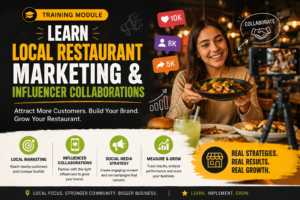
If you run an independent restaurant, cafe, bistro, or pizzeria, you’ve probably noticed something: people aren’t finding you through the Yellow Pages anymore. In fact, they’re not even finding you through Google as often as they used to. Instead, they’re finding you because someone they follow on Instagram or TikTok posted a video of themselves eating your food.
This isn’t just a passing trend. Word-of-mouth has simply moved online, and it moved fast. Because people trust a recommendation from a creator they follow more than they trust a traditional ad, most first-time visits to a local business now start with a scroll rather than a search. For a restaurant owner, that’s actually good news. After all, it means you don’t need a huge ad budget to get discovered — what you need instead is the right relationships, along with a system for making the most of them.
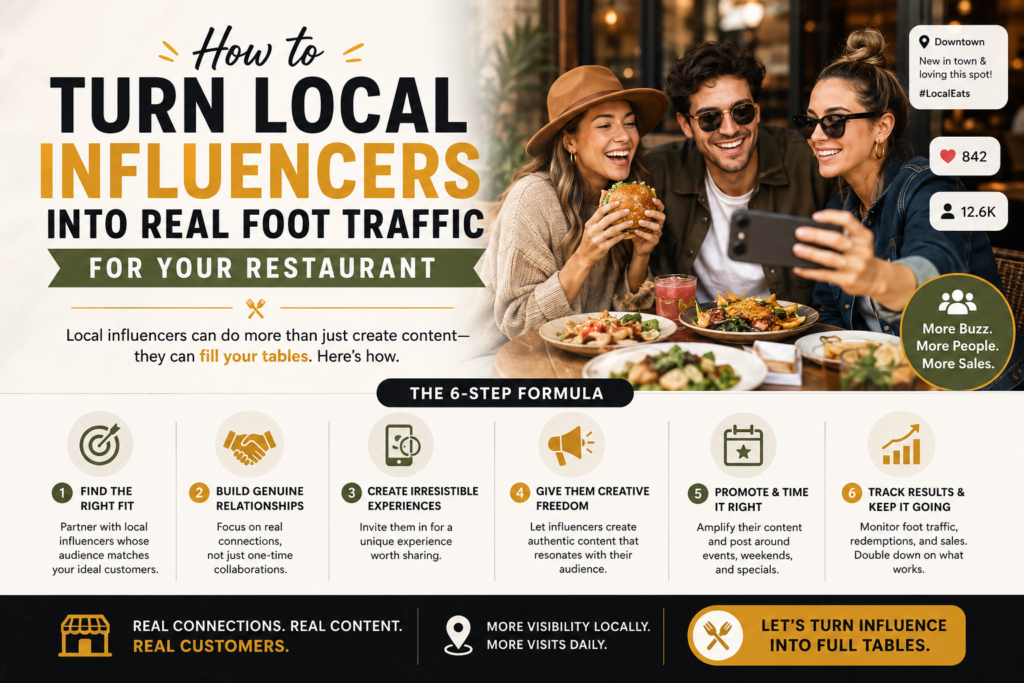
So, here’s how to build that system without burning out your marketing budget or your sanity.
Step 1: Find Influencers Who Actually Matter to You
The natural instinct is to chase the biggest account you can afford. However, you should resist it. That’s because a local creator with 3,000 to 15,000 followers will often bring you more paying customers than a celebrity with a huge but scattered audience — simply because their followers actually live in your city and eat where they live.
So, instead of sorting by follower count, look at:
- Location tags and local hashtags. Who’s already posting about restaurants in your area?
- Who’s tagging your competitors or nearby spots. After all, they clearly cover your category already.
- Engagement over reach. Comments, saves, and shares tell you more than a like count ever will. That’s because likes are cheap, whereas someone saving a post to “places to try” is a real signal.
From there, build a list of 10 to 15 local food creators, then narrow it down to the 3 to 5 whose vibe actually fits your restaurant. For example, a fine-dining bistro and a casual late-night pizza spot need very different creators, so don’t just grab whoever’s trending.
Step 2: Write a Brief That Leaves Nothing to Guesswork
Most influencer collaborations underperform not because the creator did a bad job, but rather because the restaurant never told them what a good job looked like. Fortunately, a tight brief fixes that before it becomes a problem.
Specifically, your brief should cover:
- Your story and vibe, in two sentences. In other words, give them the flavor of who you are.
- The specific offer — which menu items, what timing, and a reservation link if relevant.
- Three must-hit talking points. What do you actually want mentioned?
- Deliverables, spelled out plainly (for example: one Reel plus three Stories).
- A posting deadline.
- How you’ll track results — a unique promo code or a trackable reservation link, so this isn’t a guessing game later.
Ultimately, clarity upfront is what prevents a beautifully shot video that never mentions your happy hour or forgets to tag your location.
Step 3: Turn the Post Into Actual Foot Traffic
On its own, a single Instagram post rarely fills tables. Instead, the real magic happens in what you do around it.
- Pair it with a limited-time offer tied to a specific date or event, so there’s urgency, not just awareness.
- Repost their content on your own channels as user-generated content. Because it’s social proof straight from a real customer’s feed, this builds trust faster than any ad you could run yourself.
- Follow up with a loyalty perk for anyone who mentions the collaboration. That way, people have a reason to come back, not just visit once.
Meanwhile, track redemptions weekly rather than just impressions. After all, impressions feel good, but they don’t pay your rent — redeemed promo codes and filled reservations do.
Your Implementation Checklist
Print this out, tape it to the office wall, and actually work through it:
- Build a local influencer shortlist (10–15 names)
- Narrow to 3–5 aligned partners
- Draft and send collaboration briefs
- Set a trackable promo code or reservation link per partner
- Schedule content around a limited-time offer or event
- Repost UGC across your own social channels
- Add a loyalty-program touchpoint to the campaign
- Review redemption and reservation data weekly
- Log results and repeat with top-performing partners
Templates You Can Steal
Outreach message:
“Hi [Name], we love your content on [specific post]. We’d love to host you at [Restaurant] for [offer] in exchange for [deliverables]. Interested?”
Brief prompts to fill in before you reach out:
- Our story in one sentence: ___
- The offer we’re promoting: ___
- Three things we want mentioned: ___
- Deliverables and deadline: ___
- Tracking method: ___
Weekly ROI tracker — keep a simple table with these columns for each partner:
| Partner | Reach | Promo Redemptions | Reservations | Cost | Return |
|---|---|---|---|---|---|
Mistakes That Quietly Kill Campaigns
- Chasing follower count instead of local relevance
- Sending a vague brief with no clear ask or deadline
- Skipping tracking entirely, so you never actually know your ROI
- Treating it as a one-off post with no follow-up offer or loyalty tie-in
- Ignoring the UGC opportunity — reposting builds trust faster than ads alone
The Bottom Line
When done well, local micro-influencer campaigns can return several dollars for every dollar you put in. That said, this only works if you pair the content with a clear offer and a simple way to measure what happened. So, combine influencer posts with limited-time promotions and loyalty perks, check your numbers weekly, and above all, put your budget behind whatever’s actually working. In short, that’s the whole system