
This story matters for anyone building an app today. App stores are crowded. Millions of apps fight for the same eyeballs. Most founders pour money into ads or design polish. They skip the words. That’s a mistake.
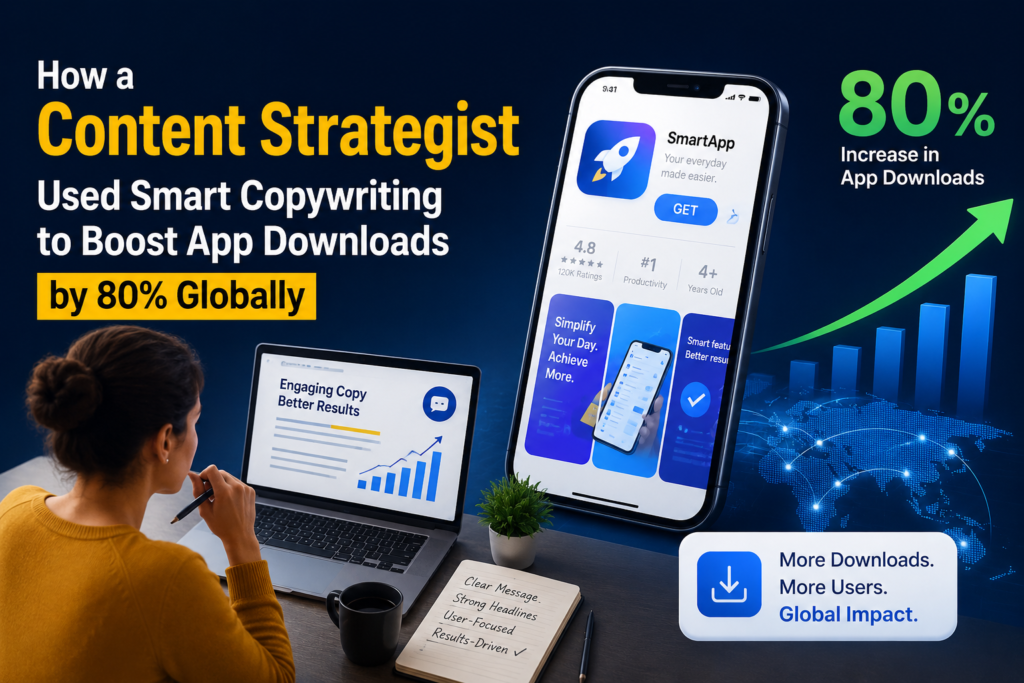
Small words moved big numbers. A content strategist swapped a handful of keywords in an app’s store listing. Downloads jumped 80% within weeks. No redesign happened. No new features launched. Just sharper copywriting did the work.
The Problem: Great App, Invisible Listing
The app worked well. Users who found it loved it. But almost no one found it. The title used vague, generic language. The description read like a technical manual. Nobody searched those terms.
A content strategist stepped in to audit the listing. She found three core issues fast:
- The title lacked any high-intent keyword.
- The description buried benefits under jargon.
- The call-to-action felt flat and forgettable.
These gaps kept the app buried in search results. Users never got the chance to discover it.
Why Copywriting Changes Everything
Copywriting isn’t decoration. It’s strategy. Every word in an app store listing either pulls a user closer or pushes them away. Search algorithms read keywords first. Humans read benefits second. Good copywriting speaks to both.
The content strategist rebuilt the listing from scratch. She researched what real users typed into app store search bars. She checked competitor listings. She tested phrases across five language markets. Then she rewrote everything with purpose.
The title changed from a brand-only name to a benefit-driven phrase. It now included the exact keyword users searched most. The subtitle added a second keyword variant. Together, they doubled the app’s searchable surface area.https://example.com/what-is-app-store-optimization
The description got a full rewrite too. Long paragraphs became short, punchy lines. Passive phrases like “features can be accessed by users” became active ones: “Users unlock features instantly.” Active voice reads faster. It feels more confident. Search engines and readers both reward that clarity.
The Keyword Strategy Behind the Numbers
The content strategist didn’t guess at keywords. She built a research process:
- Search volume data. She pulled top search terms from app store analytics tools.
- Competitor gaps. She found keywords competitors ignored but users searched anyway.
- Localized copywriting. She adapted keywords for each region instead of translating word-for-word.
That last step made the biggest difference. A phrase that ranks well in English often means nothing in Japanese or Portuguese search behavior. The strategist worked with native copywriters in each market. They chose keywords real users typed, not literal translations.
This localized copywriting effort paid off fastest in Southeast Asia and Latin America. Downloads in those regions grew even faster than in the US market.
The Results: 80% Growth, Zero Extra Ad Spend
Within six weeks, downloads rose 80% globally. Organic search traffic to the app listing tripled. Conversion rate from listing view to download also improved. Better keywords didn’t just attract more visitors. They attracted the right visitors.
No paid campaign touched this growth. The team didn’t increase its ad budget. They didn’t change the app icon or screenshots. The entire lift came from copywriting and keyword placement.
This proves a simple point. Words carry weight. A content strategist who understands both search behavior and human psychology can outperform a bigger marketing budget.
What Other Founders Can Learn
You don’t need a huge team to repeat this. Start small. Audit your current app title and description. Ask three questions:
- Does the title include a keyword users actually search?
- Does the description explain benefits in short, active sentences?
- Does the copy sound human, not robotic?
If any answer is no, you have room to grow. Hire a content strategist, or study copywriting fundamentals yourself. Read your competitors’ listings. Notice which words repeat. Notice which words feel stale.
Then rewrite with intention. Cut long sentences. Swap passive phrases for active ones. Lead with benefits, not features. Test different keyword combinations across markets instead of assuming one version fits all.
Final Thoughts
Big results don’t always need big budgets. Sometimes they need better words. This app’s 80% download growth came from disciplined copywriting and a content strategist who took keywords seriously.
Your app might already have everything users want. It just needs to say so, clearly and in the language your audience actually searches. Start with your title. Start with one keyword. The results might surprise you.