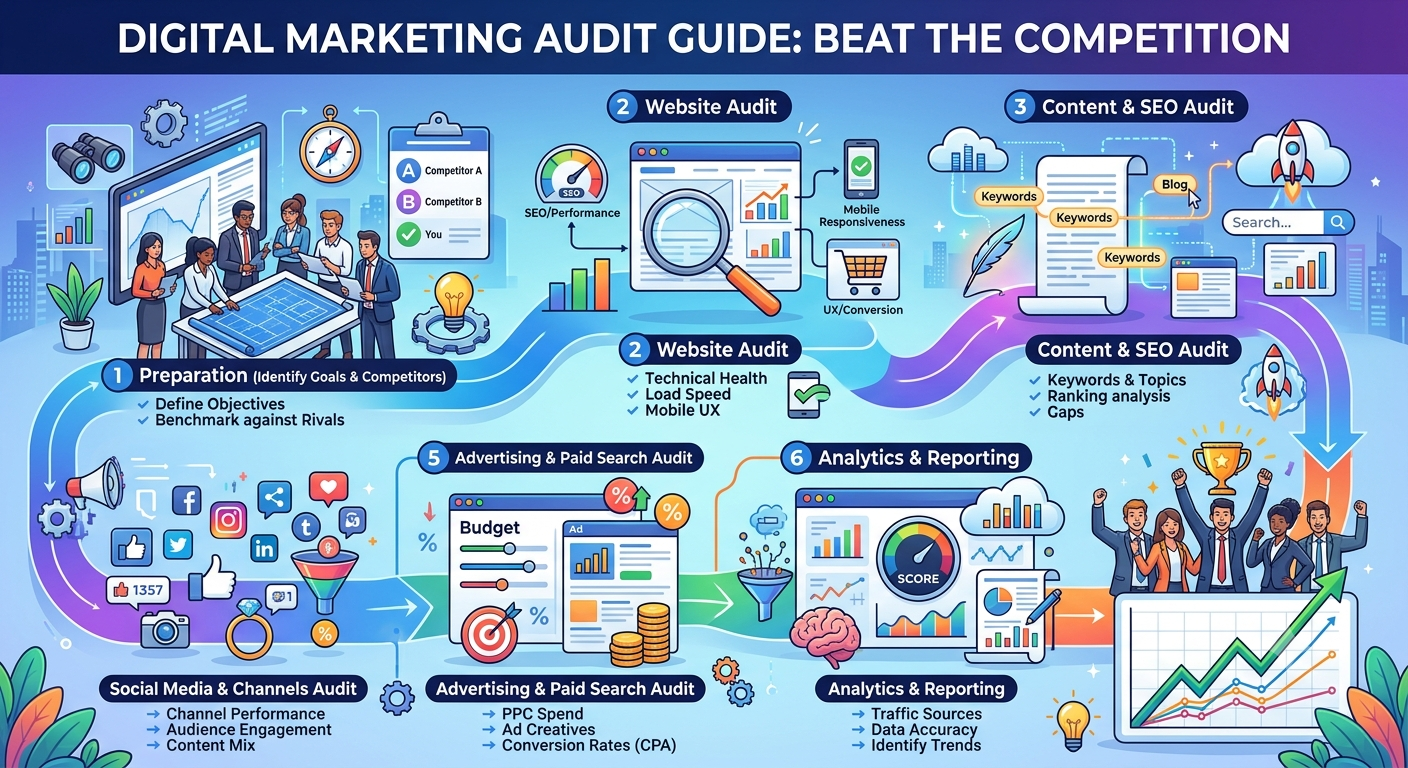


Running a small business means wearing a dozen hats — and “marketer” is often the one that fits worst. Your sales team knows your product inside and out, but ask them to launch a PPC campaign or write a converting email sequence, and things get shaky fast.
That’s where digital marketing training comes in. Not generic webinars that leave you with a PDF and no plan — but hands-on marketing workshops for small business teams that turn strategy into action within days, not quarters.
This guide walks through what practical SMB marketing education actually looks like, why it matters for your bottom line, and how to structure a workshop program your team will actually use.
Why Digital Marketing Training Matters for SMBs
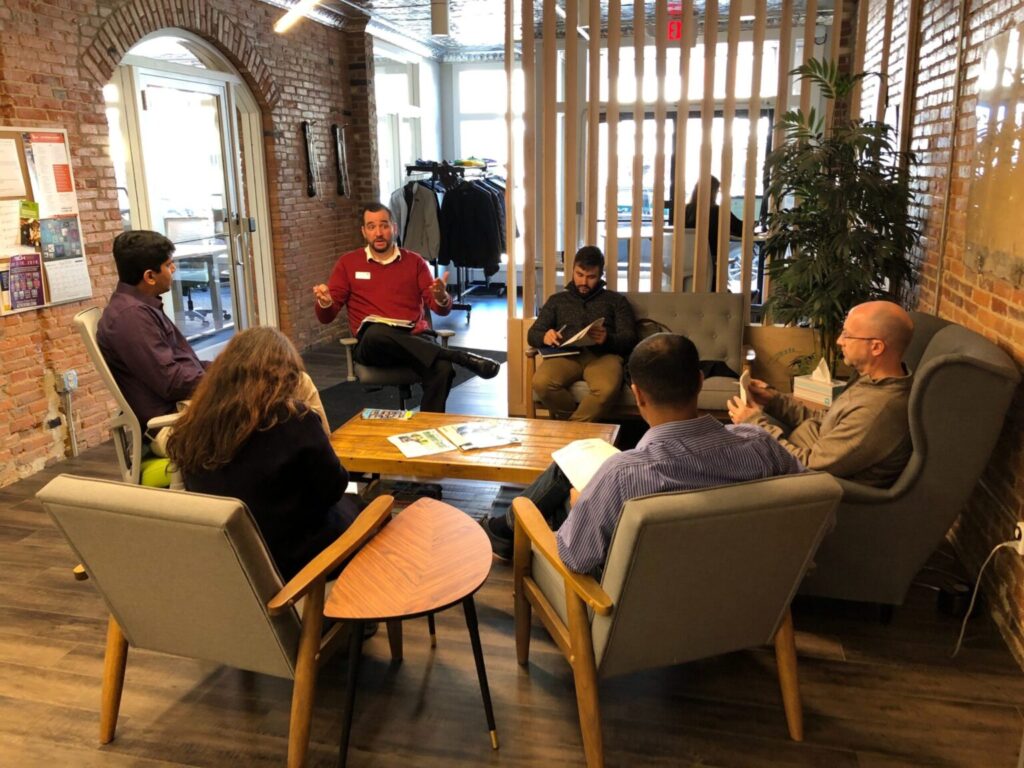
Most small business owners didn’t start their company to become marketers. But in a landscape where customers discover, compare, and buy almost entirely online, marketing fluency has become a core business skill — not a nice-to-have.
The data backs this up. Small businesses that invest in formal marketing training tend to report stronger quarterly lead quality and better conversion rates than those relying on ad-hoc, self-taught approaches. Training participation is also linked to faster marketing execution — teams that have been through structured programs launch campaigns more frequently and with more confidence, instead of stalling at the planning stage.
There’s a sales angle too. Regular upskilling of sales teams in digital channels correlates with higher win rates and shorter sales cycles, because reps who understand how leads are generated and nurtured can have smarter, more relevant conversations with prospects.
And when training sticks, it changes the sales-marketing relationship itself: companies with documented digital marketing plans see much better alignment between the two functions, along with a stronger return on marketing spend.
What Makes Training “Practical”
The word “practical” gets thrown around a lot, so let’s be specific. Practical marketing tactics training means:
- Real tools, real accounts. Participants work inside actual ad platforms, CRMs, and email tools — not slides describing them.
- Immediate application. Every session ends with something built: a campaign draft, an email sequence, a content calendar — not just notes.
- Role-specific tracks. Owners need strategy and ROI literacy. Sales teams need messaging and lead-handling skills. One-size-fits-all training rarely serves either well.
- Feedback loops. Participants get a working session where trainers review their output live and correct course before launch.
This hands-on, workshop-style approach consistently outperforms lecture-only formats when it comes to retention — people remember what they build, not just what they hear.
Core Topics Worth Prioritizing
Not every SMB needs the same curriculum, but a few areas consistently deliver the most value:
- SEO for small business — practical, low-lift optimization that improves local and organic visibility without a full-time specialist.
- Social media advertising training — building and targeting campaigns on the platforms where your customers actually spend time.
- Content marketing workshop modules — creating a repeatable content engine instead of one-off posts.
- Email marketing training — sequences, segmentation, and copy that moves leads toward a decision.
- PPC advertising workshop sessions — budget-conscious campaign structure and keyword strategy for teams without a dedicated ad buyer.
- Marketing strategy for SMBs — tying all of the above into a single, documented plan the whole team can execute against.
Sample Workshop Outline

Here’s what a focused, one-day training program might look like in practice:
Format: In-person or live virtual, 6 hours (with breaks), groups of 6–15 Audience: Business owner + sales/marketing team members
| Time | Module | Activity | Output |
|---|---|---|---|
| 9:00–9:45 | Marketing Strategy Foundations | Audit current channels & goals | 1-page strategy brief |
| 9:45–10:45 | SEO & Local Visibility | Live site/listing audit | Prioritized fix list |
| 11:00–12:00 | Social & Paid Advertising | Build a sample ad set | Draft campaign in-platform |
| 1:00–2:00 | Content & Email Marketing | Draft a 3-email nurture sequence | Ready-to-send sequence |
| 2:15–3:15 | Sales & Marketing Alignment | Map leads to CRM stages | Updated lead workflow |
| 3:30–4:30 | Measurement & ROI | Set up a simple tracking dashboard | Reporting template |
| 4:30–5:00 | Wrap-up & 30-Day Plan | Team commits to next actions | Action plan document |
Multi-day or hybrid formats (live kickoff + async follow-up sessions) work well for busier teams, and modules can be reordered or swapped based on industry — a service business and an e-commerce brand won’t prioritize the same channels.
Measuring the Impact
Training only earns its keep if you can see results. Track these before and after a workshop:
- Lead volume and lead quality by source
- Campaign launch frequency (how often the team actually ships something)
- Sales cycle length and win rate
- Email open/click and conversion rates
- Marketing spend efficiency (cost per lead, ROAS)
Set a baseline before the workshop and revisit these numbers 30 and 90 days out — that’s usually enough time to see whether new skills are translating into pipeline movement.
Formats That Fit Busy Schedules
Small business owners don’t have a spare week for training. That’s why flexible delivery matters:
- Live in-person workshops for teams that want hands-on coaching and networking
- Live virtual sessions for distributed or remote sales teams
- Hybrid programs combining a live kickoff with self-paced follow-up modules
- Short recurring sessions (90 minutes, biweekly) for teams that prefer steady skill-building over a single intensive day
What Teams Are Saying
“We went into the workshop thinking we needed a bigger ad budget. We came out with a clearer strategy, a working email sequence, and a sales team that finally understood what marketing was actually doing for them.” — Small business owner, professional services
“The hands-on format meant we weren’t just taking notes — we left with campaigns already built. That’s the difference between a workshop and a webinar.” — Sales manager, retail SMB
Ready to Upskill Your Team?
Digital marketing doesn’t have to be a mystery your team outsources or avoids. With the right training — practical, role-specific, and built around your actual sales process — your team can start executing with confidence within a single session.
Book a workshop consultation to discuss your team’s goals, or download our free workshop checklist below to see exactly what a session includes before you commit.
Downloadable Checklist: Is Your Team Ready for a Marketing Workshop?
Use this quick checklist to prep your team and get the most out of a training session.
Before the workshop:
- Identify 2–3 specific marketing challenges you want solved (not just “get better at marketing”)
- Gather access/logins to current ad accounts, CRM, and email platform
- Pull baseline metrics: lead volume, conversion rate, campaign frequency
- Confirm which team members will attend (owners, sales, marketing leads)
- Share your current sales process or funnel stages with the trainer
During the workshop:
- Bring a laptop — sessions are hands-on, not lecture-only
- Assign one person to document decisions and next steps
- Prioritize questions specific to your industry or customer type
After the workshop:
- Schedule a 30-day check-in to review what’s been implemented
- Compare baseline metrics against post-training performance
- Identify which module needs a refresher or deeper follow-up session
Want the full itinerary and booking details? Reach out to schedule a workshop tailored to your team’s size, industry, and goals.