
Introduction
Your landing page can make or break your marketing campaign. However, most landing pages convert at only 2-5% on average. This means you’re losing 95% of your traffic.
The good news? Landing page optimization can change everything. In fact, top-performing pages convert at over 10% with the right strategy.
In this guide, you’ll learn conversion rate optimization techniques for landing page design. Moreover, you’ll get a proven framework to boost your conversions immediately. Let’s dive in.
What Is Landing Page Optimization?
Landing page optimization combines design principles with CRO best practices. The goal is simple: turn more visitors into customers or leads.
Unlike regular web pages, landing pages focus on one specific action. For example, this might be downloading an ebook, signing up for a trial, or making a purchase.
Therefore, every element on your landing page should guide visitors toward that action. Nothing should distract from your conversion goal.
Why Landing Page Design Matters for Conversions
Design isn’t just about looking pretty. Instead, it directly impacts how visitors perceive and interact with your offer.
Poor design creates confusion and friction. As a result, visitors bounce without converting. Conversely, strategic design removes barriers and builds trust.
Moreover, the right design hierarchy guides the eye naturally. This means visitors see your most important elements first. Consequently, they understand your value proposition immediately.
7 Essential Elements of High-Converting Landing Pages
Let’s examine the critical components every optimized landing page needs.
1. Compelling Value Proposition
Your value proposition answers one question: “Why should I care?” Therefore, it must be crystal clear and benefit-focused.
Place your value proposition above the fold. Visitors should grasp your offer within 3 seconds. For instance, “Double Your Sales in 30 Days” beats “Marketing Software Solution.”
Additionally, your headline should be specific and results-oriented. Vague promises don’t convert.
2. Strategic Visual Hierarchy
Visual hierarchy controls where visitors look first. Use size, color, and placement to create a natural flow.
For example, your headline should be the largest text element. Then, supporting copy should be smaller but still readable. Finally, your call-to-action button should stand out with contrasting colors.
Furthermore, white space prevents overwhelming visitors. Clean layouts convert better than cluttered ones.
3. Powerful Call-to-Action (CTA)
Your CTA is the most important conversion element. Therefore, it deserves special attention.
Make your CTA button large and prominent. Use action-oriented copy like “Get My Free Trial” instead of generic “Submit.” Moreover, ensure the button color contrasts sharply with your background.
Additionally, consider placing CTAs in multiple locations for longer pages. This gives visitors more conversion opportunities as they scroll.
4. Trust Signals and Social Proof
Visitors need to trust you before converting. Consequently, trust signals become essential for landing page optimization.
Include customer testimonials with photos and names. These feel authentic and relatable. Furthermore, display security badges, certifications, or media mentions.
For instance, showing “As seen in Forbes” or “Trusted by 10,000+ customers” builds credibility instantly. As a result, conversion anxiety decreases significantly.
5. Optimized Forms
Form design directly impacts conversion rates. However, many pages request too much information upfront.
Research shows that reducing form fields from 6 to 3 can boost completions dramatically. Therefore, only ask for essential information initially.
Moreover, use clear field labels and inline validation. This prevents errors and frustration. Additionally, explain why you need each piece of information.
6. Fast Page Speed
Speed is critical for landing page optimization. In fact, pages loading under 2 seconds convert significantly better than slower ones.
Compress your images without sacrificing quality. Furthermore, minimize code and leverage browser caching. Every second of delay reduces conversions.
Additionally, test your page speed on mobile devices specifically. Mobile users are especially sensitive to slow loading times.
7. Mobile-Responsive Design
More than half of web traffic comes from mobile devices. Therefore, mobile optimization isn’t optional anymore.
Your landing page must look perfect on all screen sizes. Buttons should be easily tappable. Moreover, text should remain readable without zooming.
Test your design on actual devices, not just emulators. This reveals real usability issues that hurt mobile conversions.
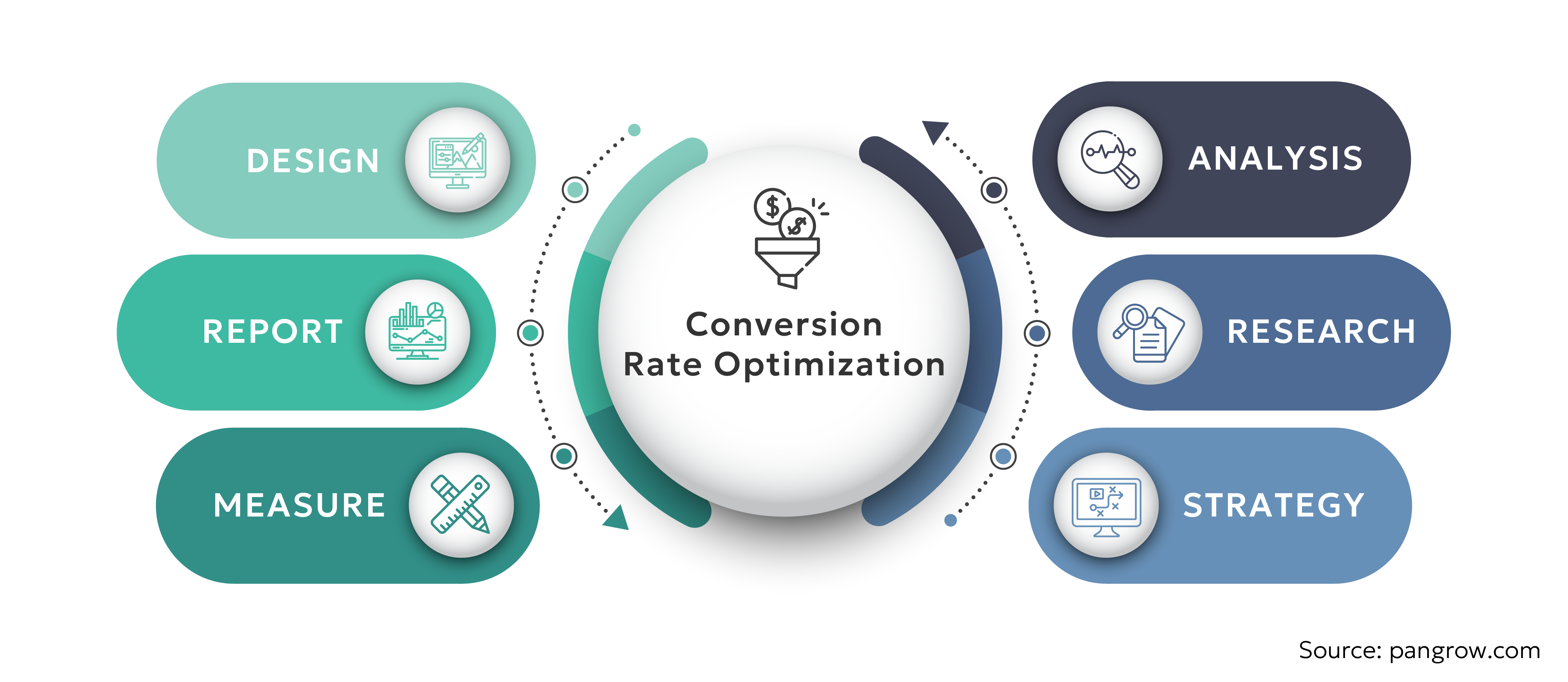
The CRO Framework for Landing Pages
Follow this proven framework to systematically improve your landing page performance.
Step 1: Analyze Current Performance
First, gather baseline data using analytics tools. Identify where visitors drop off. Additionally, use heatmaps to see where people click and scroll.
This research reveals exactly what’s preventing conversions.
Step 2: Form Hypotheses
Next, develop specific hypotheses based on your data. For example, “Changing the CTA color to green will increase clicks by 15%.”
Furthermore, prioritize hypotheses by potential impact and ease of implementation.
Step 3: Design Variations
Then, create alternative versions of your landing page elements. Focus on one major change per test to isolate results.
For instance, test different headlines separately from CTA button changes.
Step 4: Run A/B Tests
Now, launch controlled A/B testing to compare versions. Split your traffic evenly between variations. Moreover, ensure you have sufficient traffic for statistical significance.
Most tests need 2-6 weeks to produce reliable results.
Step 5: Analyze Results
After your test concludes, examine the data carefully. Look beyond just conversion rate. Additionally, consider secondary metrics like time on page and scroll depth.
Step 6: Implement Winners
Once you identify winning variations, implement them permanently. However, don’t stop there. Successful landing page optimization is continuous.
Step 7: Iterate and Improve
Finally, start the cycle again with new hypotheses. Each test teaches you more about your audience. Therefore, your optimization becomes increasingly effective over time.
Key Metrics to Track
Monitor these essential metrics for landing page optimization success:
Conversion Rate: The percentage of visitors who complete your goal action. This is your primary metric.
Bounce Rate: How many visitors leave immediately. High bounce rates indicate messaging misalignment or poor design.
Time on Page: Longer engagement often correlates with higher conversion intent. However, context matters for interpretation.
Click-Through Rate: Measures CTA effectiveness specifically. Low CTRs suggest weak value proposition or poor button design.
Page Load Time: As mentioned earlier, speed directly impacts conversions. Keep this under 2 seconds consistently.
Common Landing Page Mistakes to Avoid
Even experienced marketers make these errors. Therefore, watch out for them:
Too Many Options: Multiple CTAs confuse visitors. Instead, maintain singular focus on one conversion goal.
Weak Headlines: Generic headlines fail to capture attention. Your headline should communicate specific value immediately.
No Social Proof: Missing testimonials and trust signals increase conversion anxiety. Consequently, fewer visitors convert.
Ignoring Mobile: Neglecting mobile optimization costs you more than half your potential conversions.
Testing Without Data: Random changes waste time and resources. Always base decisions on actual user data.
Quick Wins for Immediate Improvement
Want faster results? Try these high-impact optimizations first:
- Simplify your headline to focus on one clear benefit
- Add customer testimonials with real photos
- Reduce form fields to absolute essentials
- Make your CTA button 50% larger
- Compress all images for faster loading
- Add a guarantee statement to reduce risk
These changes often produce 10-20% conversion lifts quickly.
Conclusion
Landing page optimization isn’t complicated. However, it does require systematic testing and continuous improvement.
By combining smart design with conversion rate optimization principles, you can dramatically increase your results. Moreover, even small improvements compound over time.
Start with the 7 essential elements outlined above. Then, implement the CRO framework to test and iterate. Additionally, track your key metrics to measure progress.
Remember, the average landing page converts at 2-5%. Therefore, optimization to 8-10% can double or triple your results from the same traffic.
Ready to transform your landing page performance? Begin with one element today. Test it thoroughly, learn from the data, and keep improving. Your conversions will thank you.
https://www.hotjar.com/heatmaps
https://pixicondigital.com/conversion-rate-optimization