
Most e-commerce stores treat SEO as an afterthought. This case study, however, shows what happens when you don’t. Over six months, we took one online store from stagnant organic traffic to a 150% increase in organic sessions. Below, we’ll walk through exactly how we did it, so that you can apply the same playbook to your own store.
Executive Summary
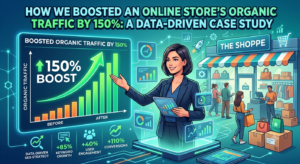
Before we started, the store relied heavily on paid ads. As a result, organic traffic was flat, and rankings for core product terms sat on page two or lower. After six months of focused SEO work, however, organic sessions grew by 150%. Meanwhile, revenue from organic channels grew alongside it, and average time on page improved as well. In short, the traffic wasn’t just bigger. It was also better.
Where We Started
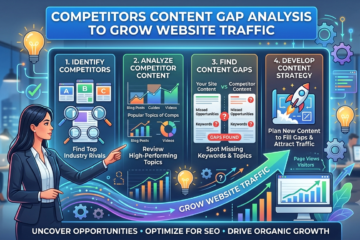
First, we ran a full technical and content audit. This revealed the usual culprits: slow page speed, thin product descriptions, missing schema markup, and a messy internal linking structure. On top of that, keyword research showed the store was targeting broad, highly competitive terms instead of the long-tail phrases their actual customers searched for.
The Process We Followed
We didn’t change everything at once. Instead, we followed a phased approach, since it’s easier to measure what’s working when you don’t touch every variable at the same time.
1. Audit. To begin with, we identified quick wins. This included fixing broken links, cleaning up duplicate content, and flagging slow-loading pages.
2. Quick Wins. Next, we implemented the easiest, highest-impact fixes first. For instance, compressing images and fixing redirect chains improved page speed almost immediately.
3. Core Optimization. From there, we rewrote product titles and meta descriptions around long-tail keywords. In addition, we added schema markup to product and review pages, which made them eligible for rich results in search.
4. Content Strategy. Meanwhile, we built out category guides and buying guides targeting questions customers were already searching for. As a result, the site had more pages capable of ranking, not just more words on existing ones.
5. Technical Fixes. At the same time, we resolved crawl errors and improved the internal linking structure, so that search engines could discover and index pages more efficiently.
6. Ongoing Measurement. Finally, we tracked organic sessions, keyword rankings, and conversion rate every month. Consequently, this let us double down on what worked and drop what didn’t.
The Results
Within three months, keyword rankings for target terms moved from page two to the top of page one for several high-intent phrases. By month six, organic sessions had grown by 150%. Just as important, the quality of that traffic held up: bounce rate dropped, and conversion rate from organic visitors improved alongside the volume increase.
Site speed improvements played a real role here. After all, even small gains in load time matter, since a one-second delay can cost e-commerce sites over 7% in conversions. Similarly, the stronger internal linking structure helped, since sites with solid internal links often see traffic gains in the 10–30% range on their own.
Key Takeaways
- First, fix technical issues. They compound the impact of every optimization that follows.
- Next, target long-tail keywords over broad, competitive terms, especially for product pages.
- Also, add schema markup early. It’s a low-effort change with a meaningful payoff in click-through rate.
- In addition, build content around real customer questions, not just keyword volume.
- Finally, measure monthly, and adjust based on what the data shows, rather than on assumptions.
Frequently Asked Questions
What were the primary tactics that drove the 150% increase? Overall, technical fixes, long-tail keyword targeting, schema markup, and a stronger content and internal linking strategy, applied together rather than in isolation.
How long did the growth take? In total, six months, with the first meaningful ranking movement appearing around month three.
What tools were used for keyword research and analytics? Generally, a mix of keyword research platforms and standard analytics tools to track rankings, sessions, and conversions.
How did you measure traffic quality, not just volume? Specifically, by tracking bounce rate, time on page, and conversion rate alongside raw session counts.
Does this approach work for smaller stores? Yes. In fact, the same phased process scales down; smaller stores often see results faster since there’s less legacy technical debt to untangle.
What’s the ongoing plan to sustain this growth? Going forward, monthly audits, continued content expansion, and regular monitoring of rankings and site health to catch issues before they affect traffic.
Want Results Like This for Your Store?
This playbook isn’t unique to one store. Rather, it’s repeatable. Therefore, if your organic traffic has plateaued, a focused audit is the fastest way to find out what’s holding you back.
Book a free SEO audit today and get a clear roadmap for growing your store’s organic traffic.