
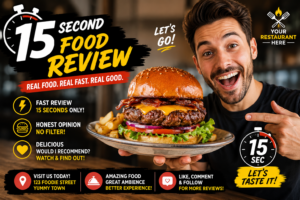
Most restaurant owners assume marketing wins require a big budget, a camera crew, or a lucky viral break. However, one of the most reliable growth tricks for local restaurants right now costs almost nothing. In fact, it’s just a single, well-made 15-second food review video, posted week after week.
So, let’s dig into why this works, walk through a real example, and then hand you a copy-paste playbook — complete with a script template and a posting checklist.
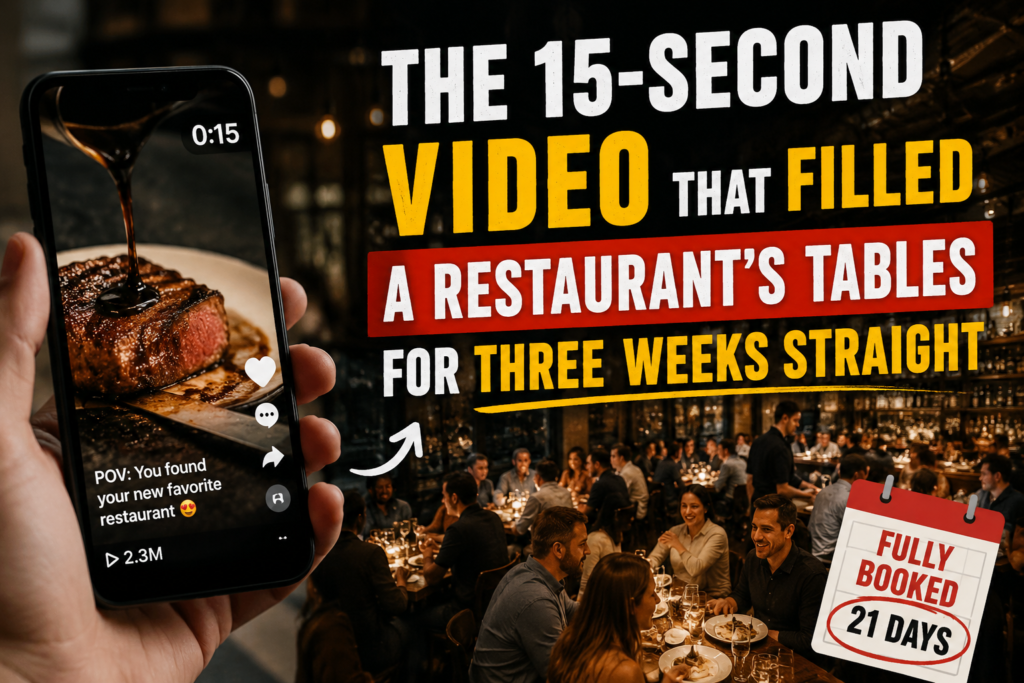
The Story: How One 15-Second Video Filled a Restaurant for Three Weeks
A small independent bistro was having trouble filling tables on weeknights. Instead of throwing money at ads, though, the owner tried something almost embarrassingly simple: they asked a regular customer — someone with a decent but unremarkable following — to film a quick, honest reaction to the restaurant’s signature pasta. There was no script involved. Instead, it was just a real bite, a real reaction, and one line about the flavor. Afterward, they posted it with a short caption and a clear ask: “Come try it — mention this video for a free side.”
As a result, that first video did better than every photo the restaurant had ever posted. Meanwhile, people started commenting to ask about hours and reservations. The following week, they repeated the process with a different dish and a different guest. By week three, customers were walking in and mentioning the videos on their own, and consequently, weeknight traffic had visibly picked up. Ultimately, there was no ad spend and no production crew involved — just the same simple format, repeated on a schedule.
Why a 15-Second Video Works So Well
Short-form video isn’t just a trend restaurants happen to be jumping on. Rather, it fits naturally with how people actually discover places to eat these days. Here are a few reasons it performs so consistently:
People actually finish watching. Because a 15-second clip is short enough, most viewers watch the whole thing, call-to-action included. As a result, that completion rate is exactly what tells the algorithm to keep showing it to more people.
Real beats polished. After all, a genuine reaction filmed on a phone feels more trustworthy than a slick ad, and ultimately, trust is what actually gets someone to show up.
You can taste it through the screen. In just a few seconds, a good clip can convey flavor, texture, and atmosphere faster than any written description ever could.
Watching someone enjoy something is contagious. Similarly, seeing a real person genuinely enjoy a dish does more convincing than any menu copy.
The barrier to entry is basically zero. Overall, you need nothing beyond a phone and some decent lighting.
The 15-Second Video Structure That Keeps Working
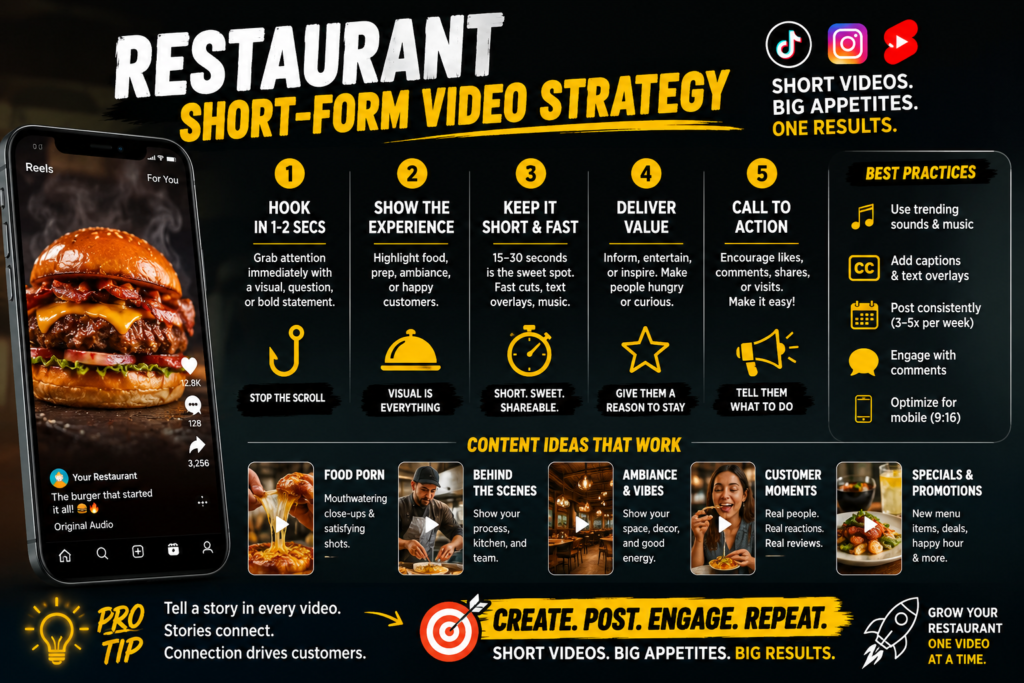
Nearly every food review video that performs well follows the same basic shape. Specifically, it breaks down into three parts:
1. The hook (0–3 seconds) First, open tight on the food — steam rising, a close-up shot, maybe a bold caption like “Is this the best pasta in town?” Ultimately, those first couple seconds decide whether someone keeps scrolling or keeps watching.
2. The moment (4–12 seconds) Next, show the bite, then the reaction. Additionally, give one specific, sensory detail — crispy edges, a smoky smell, a sauce that genuinely surprises you. One sentence is plenty here, since specific always beats generic.
3. The ask (13–15 seconds) Finally, tell people exactly what to do next: “Come try it today,” “link in bio to reserve,” or simply a visible handle and QR code. Above all, don’t make them guess.
A 15-Second Video Script You Can Steal
[0–3s] Close-up of the dish. On-screen text: “We tried [Dish Name] and here’s what happened.”
[4–12s] Bite, then genuine reaction. Caption or voiceover: “[One sensory detail — e.g., ‘the sauce is unreal’].”
[13–15s] On-screen text plus a spoken CTA: “Come try it at [Restaurant Name] — link in bio to reserve.”
Each week, swap out the dish and the reviewer, but keep the structure the same. That consistency, in turn, is what teaches your audience to expect — and share — this kind of content.
How to Film Your Own 15-Second Video
- Pick one dish a week. Instead of trying to cover everything at once, rotate through menu favorites.
- Find a reviewer who feels real. A regular customer, a staff member, or a local micro-creator will always beat a stiff, scripted read.
- Shoot near a window. Since natural light does more work than people expect, no studio is required.
- Write one strong caption. Open with a question or a bold claim, and make sure the CTA and location are easy to find.
- Post on a rhythm. Generally, two to three videos a week over a 7–10 day stretch tends to build real momentum.
- Attach a way to measure it. For example, use a promo code, a specific phrase, or a reservation link — something that tells you what the video actually drove, not just how many people watched it.
After You Post: A Quick Checklist
- First, reply to comments within a day or two
- Then, pin the best comment or question to the top
- Also, repost to Stories with a “tap to reserve” sticker
- Additionally, cross-post to TikTok if you aren’t already
- Meanwhile, keep an eye out for any bump in DMs, calls, or walk-ins that mention the video
- Furthermore, track views, saves, and shares — since likes alone don’t tell you much
- Finally, do it again next week with a new dish
What to Actually Track
Rather than chasing vanity metrics, watch these four numbers instead:
| Metric | What It Actually Tells You |
|---|---|
| Views & completion rate | Whether your hook and pacing are landing |
| Saves & shares | Whether the content is worth passing along |
| Promo code redemptions | A direct line to foot traffic |
| Reservation or DM mentions | Real conversion happening outside the app |
If redemptions or mentions keep climbing week over week, then you’ve found something worth sticking with — not just a lucky viral moment.
The Bottom Line
Ultimately, you don’t need a big budget or a viral hit to bring more people through the door. Instead, a simple, repeatable 15-second review — a real reaction, one sensory detail, and a clear next step — can outperform far more expensive marketing, especially once you’ve got a way to actually measure what it’s driving.