
Content Brief: Inbound vs Outbound Lead Generation: Which Costs MOFU-COMM
Topic
– Inbound vs Outbound Lead Generation: Which Costs Less
Goal
– The main goal is to help readers understand how much inbound and outbound lead generation cost and which one gives better results with practical advice on when to use each approach at the Middle of the Funnel stage and how to make the most of your budget.
Content type
– This will be an article with a quick comparison of costs a case study and a simple plan of action.
5 title suggestions
– Inbound vs Outbound Lead Generation: Which Costs Less for Middle of the Funnel Campaigns?
– Middle of the Funnel Guide: Do Inbound or Outbound Lead Generation Cost Less?
– Cost Comparison: Inbound vs Outbound Lead Generation for Middle of the Funnel Results
– Which Lead Generation Strategy Saves You Money: Inbound or Outbound at the Middle of the Funnel Stage?
– Smart Budgeting for Lead Generation: Comparing Inbound and Outbound Costs for Middle of the Funnel Success
Target audience
– Marketing leaders and Chief Marketing Officers
– Teams that focus on growth and revenue in the business-to-business software, technology and professional services sectors
– Sales operations and enablement teams
– Startup founders who want to make the most of their marketing budget
A list of related keywords
– inbound vs outbound lead generation
– the cost of lead generation
– Middle of the Funnel lead generation
– the cost per lead for inbound marketing
– the cost per lead for outbound marketing
– the efficiency of inbound marketing costs
– the cost of outbound sales
– the return on investment for lead generation
– the cost of marketing automation
– comparing the cost of demand generation
– the cost of aligning sales and marketing teams
– the cost of generating leads in the business-to-business sector
Average word count
– 1,200 to 1,500 words
Related questions
– How much does inbound lead generation cost compared to outbound lead generation?
– What is the typical difference in return on investment between outbound lead generation at the Middle of the Funnel stage?
– Which channel provides higher-quality leads at a lower cost during the Middle of the Funnel stage?
– How should you split your budget between inbound and outbound lead generation for Middle of the Funnel goals?
– What factors affect the cost per lead for inbound and outbound marketing?
– Can using both inbound and outbound strategies reduce overall costs while maintaining quality?
– What are some quick and easy ways to reduce costs during the Middle of the Funnel stage for both outbound strategies?
Related statistics
– Inbound leads usually cost less than outbound leads often around 60 to 61 percent less.
– Inbound marketing leads tend to convert at higher rates during the Middle of the Funnel stage than outbound efforts.
– Outbound lead generation can lead to faster pipeline growth but it often costs more per lead and may not always be the best fit without proper targeting.
– Companies that use a combination of inbound and outbound strategies tend to have higher overall lead-to-opportunity conversion rates during the Middle of the Funnel stage than those that use only one approach.
– Content marketing and search engine optimization-driven inbound programs often show increasing returns on investment over time which can lower the cost of leads during the Middle of the Funnel stage.
– Personalization and multi-channel outreach in outbound marketing such as email and social selling can improve response rates but they require more investment in tools and data quality.
Notes for the writer
– Please include a side-by-side comparison of the costs, including the cost per lead the quality of marketing qualified leads and sales qualified leads and the typical revenue impact during the Middle of the Funnel stage.
– Add a case study or hypothetical scenario that illustrates how to split the budget, such as 60 percent for inbound and 40 percent for outbound and the outcomes.
– Provide practical advice on when to prioritize inbound lead generation, when to supplement with outbound lead generation and how to measure the impact during the Middle of the Funnel stage.
Evidence and data sources to consider
– Industry benchmarks from marketing analytics providers, such as HubSpot, Demand Gen Report, Gartner, Forrester and SiriusDecisions for inbound and outbound cost and conversion metrics.
– Case studies from business-to-business technology or software companies that illustrate Middle of the Funnel outcomes.
– The latest trends in marketing automation, customer relationship management integration and data quality that affect Middle of the Funnel costs.
Inbound vs Outbound Lead Generation: Which Costs Less for Middle of the Funnel Campaigns?
For business-to-business companies generating high-quality leads is half the battle. The real challenge is in the Middle of the Funnel, where potential customers have already shown interest but need nurturing before they become sales-qualified opportunities. At this stage marketing leaders often ask: Should we invest more in lead generation or outbound lead generation to maximize our return on investment while keeping costs under control?
The answer is not as simple as choosing the option. While inbound marketing tends to have long-term costs outbound campaigns can produce faster pipeline growth when done strategically. The key is to understand how each approach affects the cost per lead, marketing efficiency lead quality and overall revenue generation.
This guide compares outbound lead generation from a cost perspective explores where each strategy performs best during the Middle of the Funnel stage and provides practical advice to help businesses make the most of their marketing budgets.
Understanding Middle of the Funnel Lead Generation
The marketing funnel has three stages:
• Top of the Funnel: Building awareness
• Middle of the Funnel: Educating and nurturing potential customers
• Bottom of the Funnel: Driving purchase decisions
The Middle of the Funnel is where potential buyers start evaluating solutions, comparing vendors and engaging with educational content, such as:
• Case studies
• Product webinars
• Whitepapers
• Comparison guides
• Email nurturing campaigns
• Product demonstrations
Since these potential customers have already shown interest generating qualified leads efficiently becomes critical.
What Is Inbound Lead Generation?
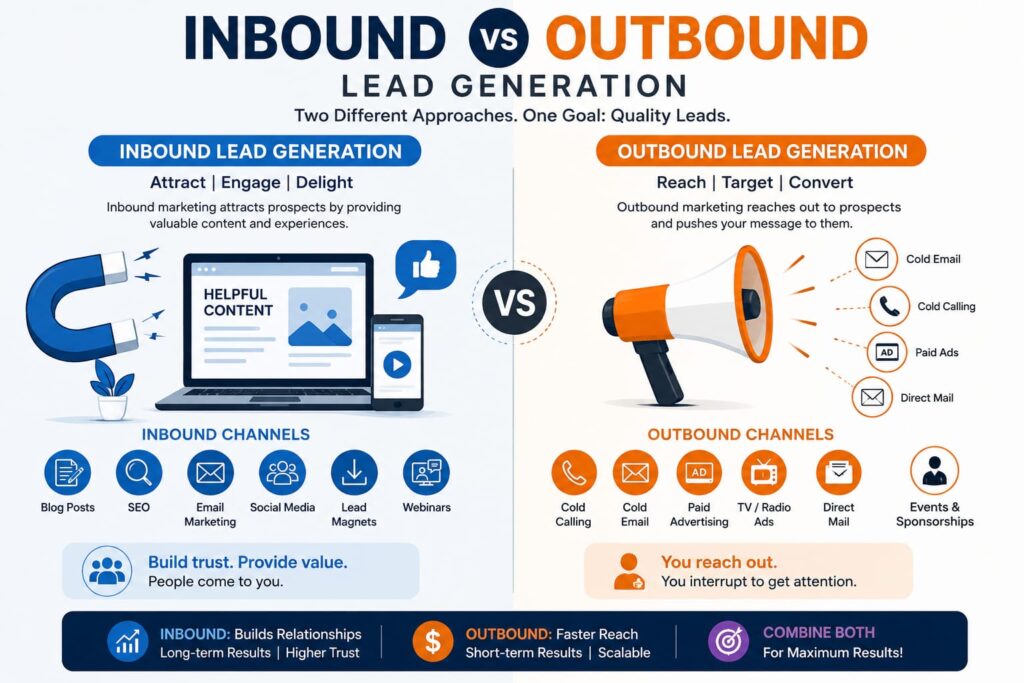
Inbound lead generation attracts customers naturally by providing valuable content and experiences that encourage them to engage with your business.
Common inbound channels include:
• Search engine optimization
• Content marketing
• Blogs
• Webinars
• media
• Email nurturing
• Marketing automation
• Organic search
Instead of interrupting potential customers inbound marketing allows buyers to discover your business while researching solutions.
Cost Characteristics of Inbound
Inbound campaigns usually require:
• Creating content
• Optimizing for search engines
• Marketing automation software
• Customer relationship management integration
• Design resources
Although the initial investments may seem significant the cost per lead decreases over time because performing content continues to generate traffic and leads without proportional increases in spending.
Industry benchmarks often report that inbound leads cost 60 to 61 percent less than outbound leads especially once a content library starts producing consistent organic traffic.
What Is Outbound Lead Generation?
Outbound lead generation proactively reaches customers instead of waiting for them to discover your brand.
Typical outbound activities include:
• Cold email campaigns
• LinkedIn outreach
• Sales calls
• Paid advertising
• Account-Based Marketing
• Purchased prospect lists
• Event outreach
Outbound campaigns help companies target industries, job roles or enterprise accounts with personalized messaging.
Cost Characteristics of Outbound
Outbound generally requires investment in:
• Sales representatives
• Prospect databases
• Outreach tools
• Advertising budgets
• Customer relationship management
• Personalization software
Unlike inbound outbound costs remain relatively constant because each new campaign requires additional effort and resources.
However outbound often delivers pipeline generation making it attractive for companies seeking immediate revenue opportunities.
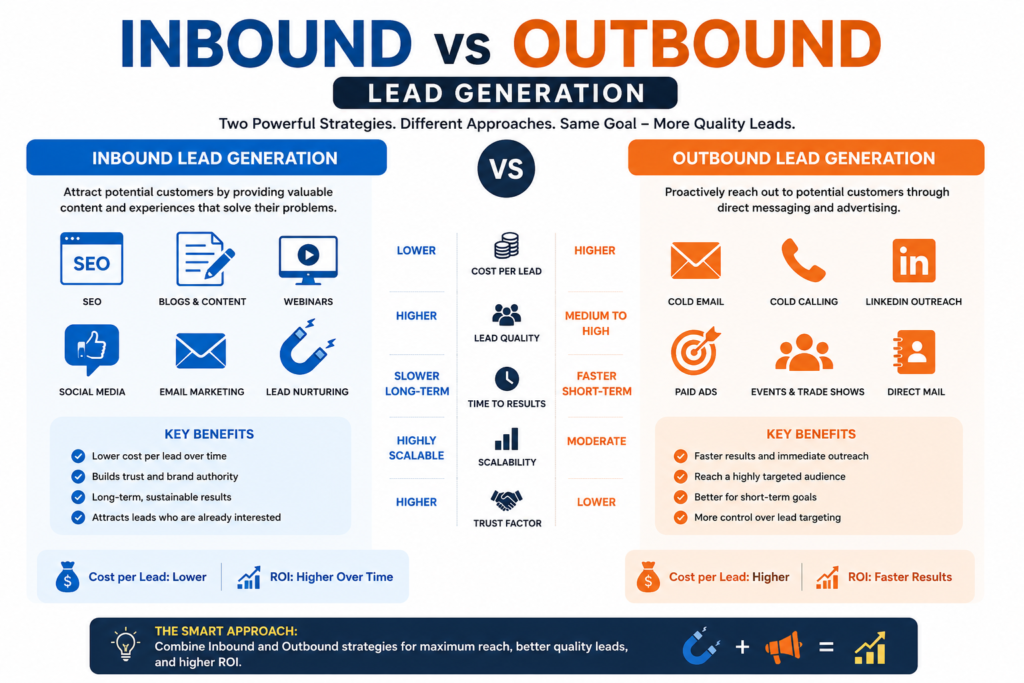
Side-by-Side Cost Comparison
Factor Inbound Lead Generation Outbound Lead Generation
Initial Investment Moderate Moderate to High
Long-Term Cost Lower Higher
Cost Per Lead Low High
Lead Quality High Medium to High
Scalability Excellent Moderate
Speed of Results to Medium Fast
Marketing Automation Dependency High Medium
Sales Team Dependency Low High
Return on Investment Timeline Long-term Short-term
While inbound often delivers lower acquisition costs over time outbound provides faster access to qualified prospects.
Simple Middle of the Funnel Cost Calculator Example
Consider a business-to-business software company with a lead generation budget of $20,000.
Scenario A – 100% Inbound
Monthly Spend: $20,000
Average Cost Per Lead: $100
Total Leads Generated: 200
Lead-to-Marketing Qualified Lead Conversion: 35%
Marketing Qualified Leads: 70
Sales Qualified Lead Conversion: 40%
Sales Qualified Leads: 28
Average Deal Size: $12,000
Potential Pipeline: $336,000
Scenario B – 100% Outbound
Monthly Spend: $20,000
Average Cost Per Lead: $250
Leads Generated: 80
Lead-, to-Marketing Qualified Lead Conversion: 45%
Marketing Qualified Leads: 36
Sales Qualified Lead Conversion: 50%
Sales Qualified Leads: 18
Average Deal Size: $15,000
Potential Pipeline: $270,000
________________________________________
Key Insight
The outbound method generated leads but it brought in highly targeted prospects who were more likely to make a purchase. On the hand the inbound method produced a lot more opportunities and it cost less to get those opportunities.
Neither method is better than the other all the time. It really depends on what your businesss trying to do.
________________________________________
What Influences Lead Generation Costs?
There are things that decide whether the inbound or outbound method is more cost-effective.
1. Content Quality
If you have blogs, whitepapers, videos and webinars they can keep generating leads for months or even years.
If your content is not good it will cost more to get leads because it will not convince visitors to buy.
________________________________________
2. SEO Performance
When people find your website through search engines it can really lower the cost of getting customers over time.
If your business is on the page of search results for keywords that people use when they want to buy something you will likely spend less money on getting leads as time goes on.
________________________________________
3. Target Audience
The outbound method works better when you target groups, such as:
• Big companies
• Small industries
• People who make decisions
• Accounts that could bring in a lot of money
If you try to reach too many people with the outbound method you will probably get fewer responses and spend more money.
________________________________________
4. Marketing Automation
Automating some tasks can save time and effort by helping prospects through:
• Email sequences
• Scoring leads
• Updating customer relationship management systems
• Giving recommendations
Automation can make both the inbound and outbound methods more efficient.
________________________________________
5. Sales and Marketing Alignment
When the marketing and sales teams agree on what makes a lead fewer leads are wasted.
This improves:
• The quality of marketing leads
• The number of sales leads
• How efficiently you make money
• The cost of getting customers
________________________________________
ROI Comparison
Inbound ROI
The inbound method often brings in money over time.
For example a blog post can keep generating leads for years.
Each new lead reduces the cost of the investment.
The benefits include:
• cost of getting new customers
• Being seen as an authority in your field
• People trusting you
• Better returns on investment in the long run
________________________________________
Outbound ROI
The outbound method brings in money in a way.
Of waiting for people to come to you you reach out to them.
The benefits include:
• Making money
• Targeting specific accounts better
• Being able to predict your pipeline better
• Reaching companies better
Although the outbound method costs more being able to reach important accounts can make it worth the investment.
________________________________________
Case Study: A Balanced Budget Strategy
Imagine a company that makes software and has a $50,000 marketing budget.
Of choosing one method the company uses both inbound and outbound methods.
Budget Allocation
• 60% Inbound
• 40% Outbound
Inbound Activities
• Posting blogs every week
• Optimizing for search engines
• Running webinar campaigns
• Helping leads
• Sharing customer success stories
Outbound Activities
• Reaching out on LinkedIn
• Sending personalized emails
• Targeting specific accounts
• Following up with sales
Six-Month Results
• Organic website traffic increased by 75%
• The cost of leads decreased by 35%
• Outbound meetings increased by 28%
• The number of sales leads grew by 48%
• The return on marketing investment improved by 40%
The company found that the inbound method generated a stream of affordable leads while the outbound method sped up conversations with big companies.
Together both methods created an more predictable pipeline than either method alone.
________________________________________
When Should You Prioritize Inbound?
You should focus on the method when:
• You want to build your brand over time
• You want to increase organic website traffic
• You want to lower the cost of getting new customers
• You want to be seen as a leader in your field
• You have a marketing budget
• You want to create a system for generating leads that will last
Companies that want to grow over time benefit the most from the inbound method.
________________________________________
When Should You Prioritize Outbound?
The outbound method works best when:
• You are launching a product
• You are entering markets
• You are targeting big companies
• You need to fill your pipeline quickly
• You are doing account-based marketing
• You are going after high-value customers
If you need to grow your pipeline the outbound method can give you faster results even if it costs more.
________________________________________
Quick Wins to Reduce MOFU Costs
Whether you use the method the outbound method or both these tactics can help you save money:
• Use your blog content to make webinars, videos and email campaigns.
• Use lead scoring to focus on prospects who’re ready to buy.
• Personalize your outbound outreach based on what buyers want.
• Make sure your customer relationship management data is good so you do not have outdated contacts.
• Make your landing pages better so more people convert.
• Test your email subject lines. Calls to action regularly.
• Make sure your marketing and sales teams are working towards the goals, such as converting marketing leads to sales leads.
• Track the cost of getting customers and the cost per lead to see if you are really making money.
Making changes in these areas can lower your costs over time.
________________________________________
Measuring Success
To see if your middle-of-the-funnel lead generation strategy is working look at these metrics:
• Cost Per Lead
• Marketing Qualified Leads
• Sales Qualified Leads
• The rate at which leads become opportunities
• Customer Acquisition Cost
• Pipeline Value
• Revenue Generated
• Return on Marketing Investment
• Customer Lifetime Value
These metrics give you an idea of how efficient and profitable you are than just looking at the number of leads.
________________________________________
Final Verdict
So which method costs less: outbound lead generation?
In the run the inbound method is usually more cost-efficient.
It can generate traffic build your brand and produce more money over time which often results in a lower cost per lead and better returns on investment.
However the outbound method is still very valuable for companies that need to grow their pipeline target specific accounts or engage with decision-makers faster.
While it usually costs more per lead its speed and targeting capabilities can make it a good investment.
For business-to-business companies the smartest approach is to use both methods together.
A balanced budget, like spending 60% on inbound and 40% on outbound lets you benefit from the methods long-term efficiency and the outbound methods speed and precision.
By looking at your cost, per lead, conversion rates, sales lead quality and revenue impact marketing leaders can make their middle-of-the-funnel strategy better and get the most out of every dollar spent.
The cost-effective lead generation strategy is the one that fits your growth goals, sales cycle and target audience.
When the inbound and outbound methods work together they create a more scalable and more profitable marketing system that can bring in sustainable business growth.