
Whether you realize it or not, your personal brand is already speaking for you. In fact, people often form an opinion before they ever meet you.
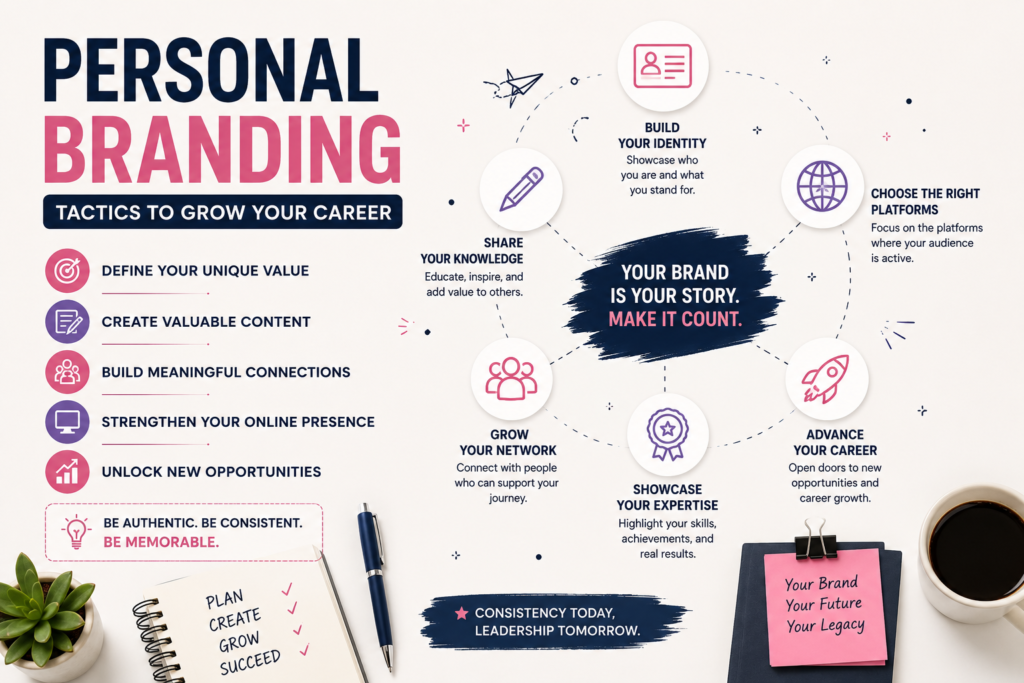
Every LinkedIn profile, portfolio, social media post, and self-introduction creates an impression. For example, recruiters and potential clients often look at your online presence before they contact you. As a result, your personal brand can influence their decision.
Fortunately, you don’t need to be an influencer or a CEO to build a strong personal brand. Whether you’re a student, freelancer, job seeker, or working professional, personal branding helps you stand out. In addition, it helps you create new opportunities and grow your career over time
What Is Personal Branding and Why Does It Matter?
Personal branding is how people see you. In simple words, it shows your skills, experience, values, and personality. As a result, people understand what makes you different from others.
However, personal branding is not about pretending to be someone else or promoting yourself all the time. Instead, it’s about being authentic, consistent, and easy to remember.
Similarly, businesses build trust through a strong brand identity. To understand how companies achieve this, explore our guide on corporate branding.
Likewise, freelancers and entrepreneurs benefit from a strong personal brand. It builds trust, increases confidence, and makes it easier for clients to choose your services.
Find Your Authentic Brand Voice
One of the biggest mistakes people make is trying to sound like everyone else. Instead, your personal brand should reflect who you truly are. As a result, people will find it easier to connect with you and remember you.
Start by asking yourself these simple questions:
- What do I want people to know me for?
- What skills or strengths make me different?
- What values guide the way I work?
- How do I want people to feel after talking to me?
Once you answer these questions, it becomes much easier to communicate in a clear and consistent way. For example, your LinkedIn profile, website, resume, and social media should all reflect the same personal brand.
Next, complete a personal brand audit. Review your online presence as if you were a recruiter visiting it for the first time. Then, ask yourself if your profiles match the professional image you want to create. If not, identify the gaps and improve them one step at a time. Over time, these small changes can make a big difference.
Choose the Platforms That Matter Most
You don’t need to be active on every social media platform. Instead, focus on one or two platforms where your audience spends the most time. As a result, you can build a stronger personal brand without feeling overwhelmed.
For most professionals and job seekers, LinkedIn is the best place to build credibility and connect with industry experts. In addition, it helps you showcase your skills, experience, and achievements.
A personal portfolio website is another useful tool. For example, it lets you display your work, certifications, projects, and accomplishments in one place. Therefore, potential employers and clients can quickly learn more about you.
Depending on your career, you can also use other platforms:
Instagram to share creative work and design projects. YouTube to teach, share ideas, or create educational content. A personal newsletter to share knowledge and build trust.
Create Content Consistently
Building a personal brand doesn’t mean posting every day. Instead, focus on sharing useful content on a regular schedule. As a result, people will begin to recognize your knowledge and trust your work.
Share helpful insights, lessons you’ve learned, industry trends, project updates, or practical tips. For example, you can explain a challenge you solved or a new skill you learned. This approach provides value without chasing viral posts.
Even one post each week can increase your visibility over time. In addition, regular posting helps you build trust and show your expertise.
To make posting easier, create a simple content calendar. Planning your posts in advance saves time and reduces stress. As a result, you’ll always have ideas ready to share.
You can also use templates for social media posts, content ideas, or your elevator pitch. This way, your message stays clear and consistent across every platform.
A Real Success Story
One learner in our course was a project manager who wanted better career opportunities. After completing the personal brand audit, she updated her LinkedIn profile, improved her professional summary, and shared project management tips every week. As a result, recruiters contacted her more often. Soon, she received more interview invitations.
Most importantly, her experience hadn’t changed. Instead, her skills became easier for employers to see.
Measure Your Progress
Building a strong personal brand takes time. Therefore, it’s important to track your progress regularly.
For example, you can measure:
- LinkedIn profile views
- Connection requests
- Post engagement
- Recruiter or client inquiries
- Portfolio visits
- Interview invitations
- Business opportunities
Review these numbers every month. This way, you’ll know what’s working and what needs improvement. Over time, small improvements can lead to better career opportunities..
Common Personal Branding Mistakes
Many people weaken their personal brand without realizing it. Small mistakes can create the wrong impression.
Common mistakes include:
- Sending different messages across different platforms
- Trying too hard to sound perfect instead of being authentic
- Posting without a clear purpose
- Ignoring profile updates for months
- Sharing too much personal information online
Remember, being authentic doesn’t mean sharing everything. Keep your personal and professional life balanced.
What You’ll Learn in This Course
Many people weaken their personal brand without realizing it. Small mistakes can create the wrong impression.
Common mistakes include:
- Sending different messages across different platforms
- Trying too hard to sound perfect instead of being authentic
- Posting without a clear purpose
- Ignoring profile updates for months
- Sharing too much personal information online
Remember, being authentic doesn’t mean sharing everything. Keep your personal and professional life balanced. Immediately.
Your personal brand is one of the few things you truly own throughout your career.
A strong personal brand helps people see your value before they meet you. It can help you find your dream job, attract freelance clients, grow your business, and expand your professional network.
Now is the best time to start building your brand.
Get instant access to the first module, practical worksheets, and the personal brand audit template. Learn how to build a personal brand that helps you stand out, earn trust, and create new career opportunities.